Category: AI Business Tools

  • AI Customer Support Software Checklist for Small Business

    AI Customer Support Software Checklist for Small Business

    Choosing AI customer support software is easier when you stop comparing feature pages and start checking readiness. The best tool for a small business is not always the one with the loudest AI claims. It is the one that fits your channels, support volume, help content, human handoff needs, reporting, and budget risk.

    Use this checklist before buying or switching support software. It works whether you are comparing Zendesk, Intercom Fin, Help Scout, Freshdesk, Tidio Lyro, Zoho Desk, HubSpot Service Hub, or another customer support platform.

    If you want a shortlist first, see our best AI customer support tools guide. If you are replacing Intercom, the best Intercom alternatives guide is more specific.

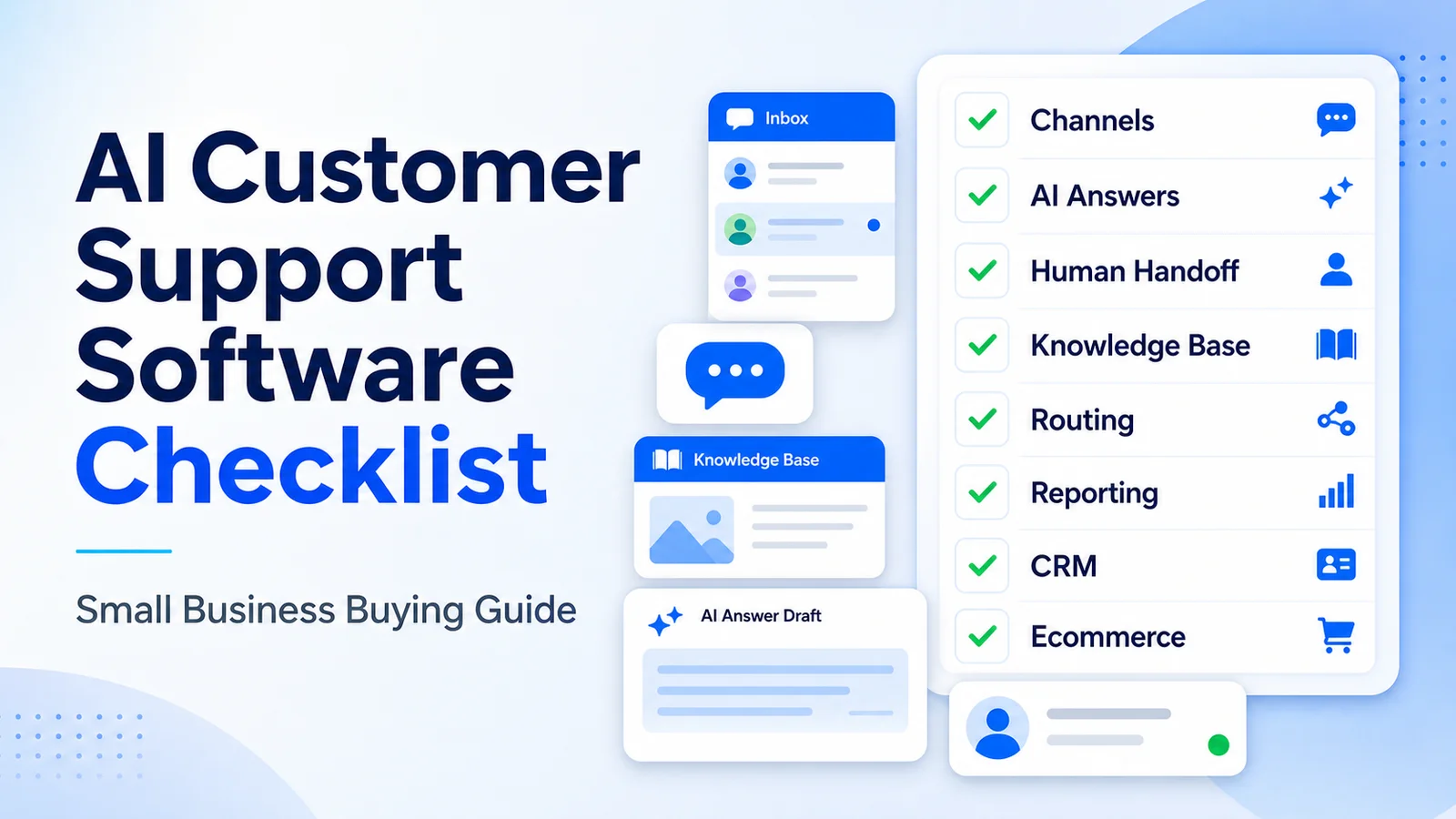
    Quick Checklist

    Area What To Check Why It Matters
    Channels Email, chat, social, help center, phone, ecommerce The tool must match where customers actually ask for help
    AI answers Source content, confidence, escalation, answer review AI support depends on good knowledge and oversight
    Human handoff Clear escalation rules and agent ownership Customers should not get trapped in automation
    Knowledge base Accuracy, freshness, article ownership AI quality improves when support content is maintained
    Routing Assignment, priority, SLAs, queues Growing teams need structure
    Reporting Volume, response time, unresolved questions Managers need to know whether support is improving
    CRM context Customer history, plan, account status Agents need context to answer well
    Ecommerce fit Orders, returns, shipping, product questions Stores need fast answers around purchase intent

    1. Start With Support Channels

    Before choosing software, list the channels customers use today. A business that receives mostly email questions needs different software than a store with constant website chat. A SaaS company with in-app messages needs different priorities than a service business using a shared support inbox.

    Ask:

    • Do customers mostly contact us by email, chat, social, or form?
    • Do we need a public help center?
    • Do we need in-app messaging?
    • Do ecommerce questions need order context?
    • Do agents need one inbox or several queues?

    If the software does not fit your main channel, the AI features will not save it. Channel fit comes first.

    2. Check Knowledge Base Readiness

    AI support tools need source content. That can include help center articles, internal docs, product documentation, policy pages, or saved replies. If those sources are thin or outdated, the AI agent will have less reliable material to use.

    Before buying, review your top 20 support questions. For each question, ask whether the answer exists in a clear, approved article. If not, fix that before expecting AI to resolve tickets.

    A small business should assign ownership for help content. Someone needs to update policies, product limits, refund rules, onboarding steps, and troubleshooting instructions. Without ownership, the knowledge base decays.

    3. Test Human Handoff

    Human handoff is one of the most important parts of AI customer support software. Customers should know when the AI cannot help and when a real person will respond.

    Check whether the tool supports:

    • handoff from AI to human agents
    • clear assignment to the right inbox or team
    • priority rules for urgent questions
    • visibility into unresolved conversations
    • agent context from the AI conversation

    The best support setup uses AI for repeatable questions and humans for judgment. Billing disputes, account access, cancellations, angry customers, and technical bugs often need human review.

    4. Review AI Answer Controls

    Do not only ask whether the tool has AI. Ask how much control your team has over AI answers.

    Important checks include:

    • which knowledge sources the AI can use
    • whether answers can be reviewed or monitored
    • whether the AI cites or traces source content internally
    • how the tool handles low-confidence questions
    • whether certain topics can be excluded from automation

    A useful AI support tool should reduce repetitive work without creating brand, policy, or trust problems.

    5. Look At Routing And Ownership

    As support grows, routing matters. A small team can sometimes share one inbox, but that gets messy when questions need different owners.

    Check whether the software can route by:

    • topic or category
    • customer type
    • urgency
    • channel
    • language or region
    • plan or account tier

    You may not need complex routing today, but choosing a tool with no path to better ownership can create another migration later.

    6. Check Reporting That Helps Decisions

    Reporting should answer practical questions, not just show dashboard decoration.

    A small business should track:

    • conversation volume
    • first response time
    • resolution time
    • unresolved questions
    • repeated topics
    • AI answer success
    • escalation rate
    • customer satisfaction when available

    If the software cannot show what customers ask most often, your team will struggle to improve the knowledge base, product experience, and support staffing.

    7. Compare CRM And Customer Context

    Support quality improves when agents know who the customer is. A good support tool should show relevant context such as account status, plan, order history, previous conversations, or CRM notes when available.

    This is where ecosystem tools can matter. HubSpot Service Hub may fit teams already using HubSpot CRM. Zoho Desk may fit teams already using Zoho. Zendesk and Freshdesk can fit teams that need more independent help desk operations.

    The question is not which ecosystem sounds best. The question is where your customer data already lives.

    8. Evaluate Ecommerce Fit Separately

    Ecommerce support has its own needs. Customers often ask about shipping, returns, sizing, discount codes, payment issues, and order status. A store may need fast chat answers more than complex ticket workflows.

    If ecommerce is your main business model, check whether the tool supports:

    • website chat
    • order-related context
    • common product questions
    • returns and shipping policies
    • handoff from pre-sale chat to human support
    • integrations with the store stack

    Tidio Lyro can be a focused fit for ecommerce chat, while broader help desks may make sense when ticket operations are more important.

    9. Model Pricing Risk Carefully

    Pricing for AI support software can include seats, plans, AI resolutions, conversations, automation limits, add-ons, or usage tiers. Do not compare only the starting price.

    Build a simple model:

    • number of agents
    • monthly conversation volume
    • expected AI-handled conversations
    • channels needed
    • help center or knowledge base needs
    • reporting and routing requirements
    • integrations that may require higher plans

    This avoids choosing a tool that looks affordable at signup but becomes expensive when the real support workflow is added.

    10. Plan A Small Rollout

    Do not roll out AI support to every customer on day one. Start with a limited set of common questions, monitor outcomes, and expand only when the answers are reliable.

    A safe rollout looks like this:

    1. choose the top support topics 2. clean the help articles for those topics 3. set handoff rules 4. test internally 5. launch to a small customer segment or channel 6. review unresolved questions 7. improve content 8. expand gradually

    This is not a workflow article. It is a buying safeguard: the software is only ready when the business has the content, people, and monitoring to support it.

    Final Recommendation

    Buy AI customer support software only after checking channels, knowledge base readiness, human handoff, AI answer control, routing, reporting, customer context, ecommerce fit, pricing risk, and rollout readiness.

    If you need a powerful help desk, shortlist Zendesk or Freshdesk. If you want AI-agent-first support, evaluate Intercom Fin. If you want a simple shared inbox, consider Help Scout. If ecommerce chat is the priority, look at Tidio Lyro. If CRM ecosystem fit matters, compare Zoho Desk and HubSpot Service Hub.

    The best software is the one your team can operate well, not the one with the most AI claims.

    FAQs

    What should I check before buying AI customer support software?

    Check your support channels, knowledge base quality, human handoff rules, AI answer controls, routing needs, reporting, CRM context, ecommerce fit, pricing model, and rollout plan. These factors matter more than generic AI feature claims.

    Do small businesses need AI customer support software?

    Small businesses need AI support software only when they have repeatable questions and enough volume for automation to help. If support volume is low or every issue needs judgment, a simpler inbox may be better.

    What makes AI customer support software work well?

    The strongest factor is accurate source content. AI support performs better when help articles, policies, product docs, and saved replies are clear, updated, and owned by someone on the team.

    Should AI support answer every customer question?

    No. AI should answer common and low-risk questions. Sensitive issues, billing disputes, account access, angry customers, and complex technical problems should have a clear human handoff path.

    What is the biggest buying mistake?

    The biggest mistake is buying based on AI features before fixing support content. If the knowledge base is weak, even a strong AI support tool will have limited value.

    Which tool is best for ecommerce support?

    Tidio Lyro is a focused option for ecommerce chat. Zendesk, Freshdesk, and Zoho Desk can also work when ecommerce support needs more structured ticketing and reporting.

    Which support tool is simplest for small teams?

    Help Scout is one of the simpler options for teams that want a clean shared inbox and customer-friendly support. Tidio can be simple for chat-first ecommerce teams.

    How should a business roll out AI support?

    Start with a small set of common questions, clean the source content, define handoff rules, test internally, launch to a limited channel, review unresolved questions, and expand gradually.
  • Best Intercom Alternatives for Small Business Support

    Best Intercom Alternatives for Small Business Support

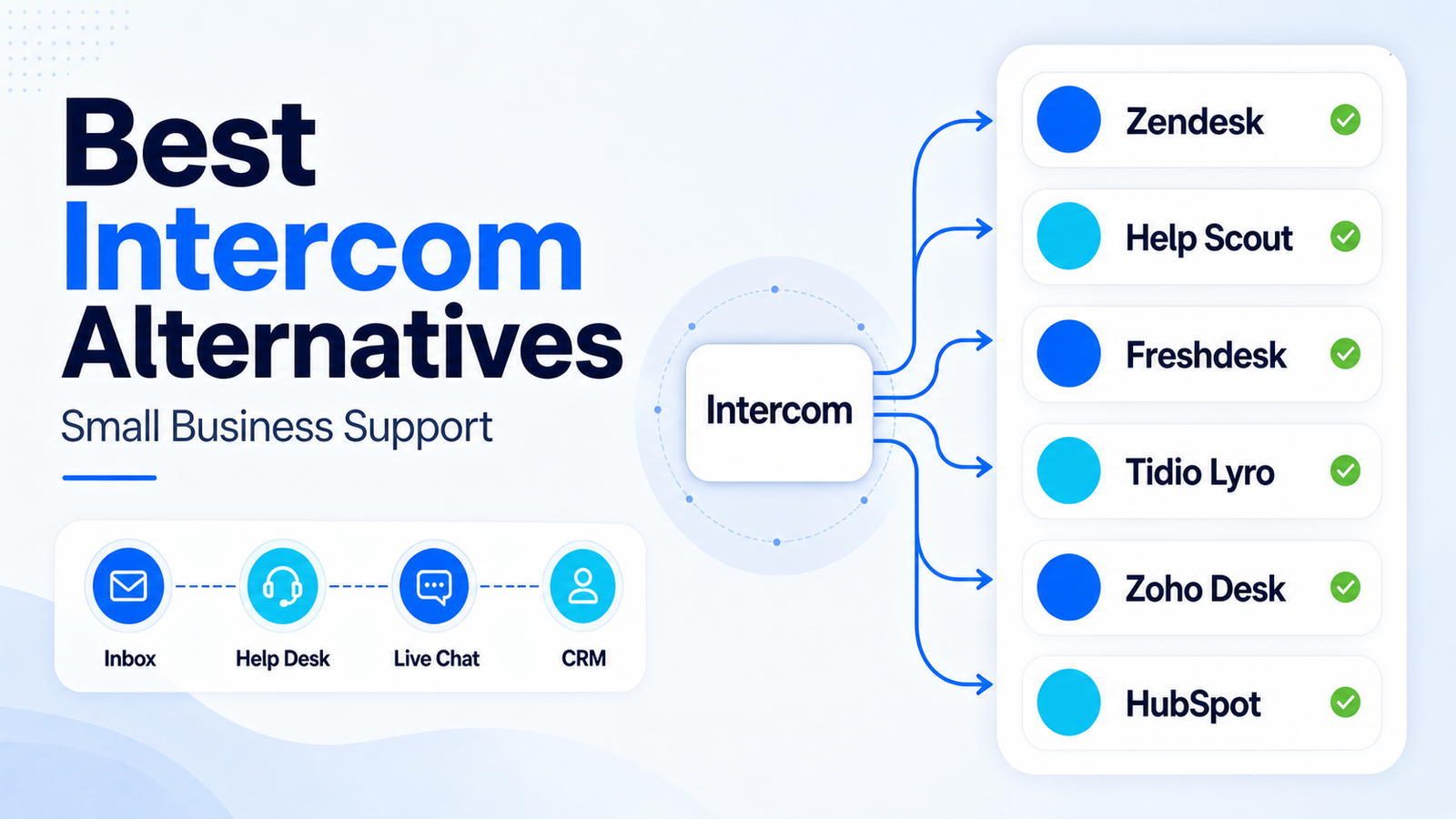
    Intercom is powerful, especially for chat-first support and AI self-service, but it is not the right fit for every small business. Some teams need a deeper help desk. Some want a simpler shared inbox. Ecommerce teams may care more about live chat and store questions. Other companies need customer support connected to a CRM or an existing business suite.

    The best Intercom alternative depends on why you are looking beyond Intercom in the first place. Choose Zendesk if your support operation needs more help desk depth. Choose Help Scout if you want a simpler shared inbox. Choose Freshdesk if budget-conscious ticketing is the priority. Choose Tidio Lyro if ecommerce chat is the main channel. Choose Zoho Desk if your company already uses Zoho. Choose HubSpot Service Hub if support needs to connect closely with CRM and sales data.

    If you want to stay inside the Intercom ecosystem, read our Intercom Fin review first. If you are comparing the broader support category, our best AI customer support tools guide is the better overview.

    Quick Comparison: Best Intercom Alternatives

    Alternative Best For Why Choose It Instead Of Intercom
    Zendesk Scaling support teams Deeper ticketing, routing, analytics, and help desk operations
    Help Scout Simple human support Cleaner shared inbox experience for small teams
    Freshdesk Budget-conscious ticketing Practical ticketing and automation without overbuilding
    Tidio Lyro Ecommerce live chat Focused website chat and AI answers for common store questions
    Zoho Desk Zoho ecosystem teams Help desk support connected to other Zoho products
    HubSpot Service Hub CRM-connected support Support, customer data, and sales context in one CRM ecosystem

    Why Look For An Intercom Alternative?

    Intercom is strongest when a team wants customer messaging, AI support, and chat-first support in one product. But not every business needs that exact shape.

    Common reasons teams compare alternatives include:

    • they want more traditional ticketing depth
    • they prefer a simpler email-first inbox
    • they need a lower-complexity setup
    • ecommerce chat matters more than SaaS support workflows
    • the company already runs on Zoho or HubSpot
    • pricing needs to match a smaller support team
    • the team wants reporting, routing, or CRM features that fit a different stack

    The right alternative should solve the reason you are leaving. Do not switch just because another tool has a longer feature list.

    1. Zendesk: Best Intercom Alternative For Full Help Desk Depth

    Zendesk is the strongest Intercom alternative when your support operation needs structure. It is built around tickets, routing, help center content, reporting, and customer service workflows.

    Zendesk makes sense when support is no longer just a chat widget. If your team needs clear assignment rules, multiple queues, manager visibility, and more traditional help desk controls, Zendesk is often the safer long-term choice.

    Choose Zendesk if:

    • support volume is growing
    • tickets need assignment and ownership
    • reporting matters
    • you need a mature help center setup
    • customer service operations are becoming more formal

    Avoid Zendesk if your team wants the lightest possible support inbox. A very small team may find it more than they need at the beginning.

    2. Help Scout: Best Intercom Alternative For A Simple Shared Inbox

    Help Scout is a better fit when your team values simplicity, personal support, and a calm shared inbox. It is useful for founders, agencies, service businesses, and small SaaS teams that do not want support software to become heavy.

    Help Scout is less about turning support into a complex operations center and more about helping humans reply well. That makes it a strong Intercom alternative for email-first teams.

    Choose Help Scout if:

    • support mostly happens through email
    • your team wants a clean shared inbox
    • you need docs and customer context
    • human tone matters more than automation depth
    • setup speed is important

    Avoid Help Scout if you need advanced routing, enterprise-style reporting, or a chat-first AI agent experience at the center of support.

    3. Freshdesk: Best Intercom Alternative For Budget-Conscious Ticketing

    Freshdesk is a practical alternative for teams that want a help desk without immediately choosing the heaviest enterprise option. It provides ticketing, automation, customer conversations, and Freshworks' broader support ecosystem.

    Freshdesk is often a good middle path. It is more structured than a simple inbox, but it can be more approachable for teams that want ticketing and automation without overcomplicating the stack.

    Choose Freshdesk if:

    • you need ticket management
    • automation would reduce repetitive work
    • email and other channels need structure
    • your team wants a help desk with room to grow
    • budget is a serious consideration

    Avoid Freshdesk if you want the most polished chat-first customer messaging interface or if your team is already committed to Intercom-style product messaging.

    4. Tidio Lyro: Best Intercom Alternative For Ecommerce Chat

    Tidio Lyro is the most focused alternative for ecommerce teams that care about website chat, common product questions, and fast answers for shoppers.

    Where Intercom can be broader and more SaaS-oriented, Tidio is easier to understand as a chat and automation layer for online stores. Lyro is especially relevant when customers ask repeated questions about products, returns, delivery, discounts, or order status.

    Choose Tidio Lyro if:

    • website chat is the main support channel
    • ecommerce questions repeat often
    • your team wants a focused chat automation tool
    • speed to setup matters
    • you do not need a full enterprise help desk

    Avoid Tidio Lyro if your support team needs deep ticket operations, complex SLAs, or a full help center-driven support platform.

    5. Zoho Desk: Best Intercom Alternative For Zoho Users

    Zoho Desk is the best Intercom alternative for teams already using Zoho products. It brings help desk operations into the Zoho ecosystem, with Zia AI available inside Zoho Desk for teams that want AI support assistance.

    Zoho Desk is strongest when customer support should connect to broader business tools such as CRM, finance, and operations. It may not be the first choice for teams that want a pure chat-first product, but it is practical for companies already using Zoho.

    Choose Zoho Desk if:

    • your company already uses Zoho apps
    • support should connect with CRM or operations
    • you need ticketing and reporting
    • you want AI assistance inside the Zoho ecosystem
    • keeping tools under one vendor matters

    Avoid Zoho Desk if your team does not use Zoho and wants a standalone support product with a more modern chat-first feel.

    6. HubSpot Service Hub: Best Intercom Alternative For CRM-Connected Support

    HubSpot Service Hub is a strong alternative when support needs to live close to marketing, sales, and CRM data. For small businesses already using HubSpot, this can make more sense than running customer support in a separate tool.

    HubSpot Service Hub is useful when support conversations should inform renewals, sales follow-up, customer health, or account management. It is less focused on being an AI-agent-first support tool and more focused on connecting customer service with the CRM.

    Choose HubSpot Service Hub if:

    • your company already uses HubSpot CRM
    • support and sales need shared customer context
    • service data should connect with marketing or account management
    • your team wants a CRM-centered service platform

    Avoid HubSpot Service Hub if all you need is a focused chat support tool or a lightweight inbox.

    Migration Checklist Before You Leave Intercom

    Switching support tools is not only a software decision. Before moving away from Intercom, list what must be preserved: active conversations, help center articles, saved replies, customer tags, routing rules, inbox ownership, reports, and any automation that affects customers. If your team uses Intercom for product messages or onboarding, confirm whether the replacement covers those use cases or whether you need a separate customer messaging tool.

    Also check how each alternative handles three practical areas. First, knowledge base migration: your help content should remain easy to update because AI support quality depends on clean source material. Second, handoff rules: customers should know when they are speaking with automation and when a human will reply. Third, reporting continuity: support leaders need a way to compare volume, response time, and unresolved conversations after the switch.

    A small business should not move everything at once unless the current setup is truly broken. A safer path is to export key support content, pilot the new inbox with one channel, train agents on escalation rules, and only then redirect all customers. This reduces the chance that the team solves one software problem while creating a customer experience problem.

    Intercom Alternatives By Team Type

    For SaaS teams, Zendesk and HubSpot Service Hub are usually the most strategic alternatives because both can support more structured customer operations. For service businesses and agencies, Help Scout is often easier because it keeps the inbox clean and personal. For ecommerce stores, Tidio Lyro is more focused on chat and shopper questions. For operations-heavy businesses already using Zoho, Zoho Desk can reduce vendor sprawl.

    The best alternative is the one that removes friction from your current support process. If your team struggles with ticket ownership, choose a stronger help desk. If your team struggles with inbox clutter, choose a simpler shared inbox. If your team struggles with store chat, choose a dedicated chat tool. If your team struggles with customer data scattered across sales and support, choose a CRM-connected option.

    When You Should Stay With Intercom

    Do not switch if Intercom is already solving your core support problem. If Fin is resolving useful conversations, your team likes the messaging workflow, and customers are getting fast answers, a new platform may create more disruption than value. Intercom remains a strong choice when chat-first support, product messaging, and AI self-service are central to the customer experience.

    A switch makes more sense when the mismatch is clear: your agents need deeper ticket operations, your team wants a simpler inbox, your store needs focused ecommerce chat, or your support data needs to live inside another CRM ecosystem.

    Which Intercom Alternative Should You Choose?

    Use this decision path:

    • Choose Zendesk if support operations are getting more complex.
    • Choose Help Scout if you want simple, personal support without heavy setup.
    • Choose Freshdesk if you want practical ticketing and automation with budget awareness.
    • Choose Tidio Lyro if ecommerce live chat is the priority.
    • Choose Zoho Desk if your company already uses Zoho.
    • Choose HubSpot Service Hub if support should connect tightly to CRM data.

    Stay with Intercom if customer messaging, chat-first support, and Fin's AI agent experience are exactly what your team wants.

    Final Recommendation

    The best Intercom alternative for most growing support teams is Zendesk because it gives the strongest help desk foundation. The best simple alternative is Help Scout. The best ecommerce chat alternative is Tidio Lyro. The best ecosystem alternatives are Zoho Desk for Zoho users and HubSpot Service Hub for HubSpot users.

    Do not choose based on brand familiarity alone. Choose based on your support channel, team size, customer volume, documentation quality, and whether you need a chat-first AI support experience or a broader help desk.

    FAQs

    What is the best Intercom alternative for small business?

    Zendesk is the strongest alternative for growing support teams, Help Scout is best for simple shared inbox support, and Tidio Lyro is best for ecommerce live chat. The right choice depends on your support channel and team size.

    Is Zendesk better than Intercom?

    Zendesk is usually better for deeper help desk operations, ticketing, routing, and reporting. Intercom is usually better for chat-first customer messaging and AI-agent-first support with Fin.

    Is Help Scout a good Intercom alternative?

    Help Scout is a good alternative for small teams that want simple, human-feeling support. It is not as chat-first as Intercom, but it can be easier for email-first teams to manage.

    What is the best Intercom alternative for ecommerce?

    Tidio Lyro is a strong ecommerce-focused alternative because it centers on live chat and AI answers for common store questions. Zendesk and Freshdesk can also work when ecommerce support needs deeper ticketing.

    Which Intercom alternative works best with CRM data?

    HubSpot Service Hub is the strongest choice if your company already uses HubSpot CRM. Zoho Desk is a strong fit if your company already works inside the Zoho ecosystem.

    Should I replace Intercom if I already use Fin?

    Not necessarily. If Fin is resolving useful support questions and your team likes Intercom's messaging workflow, staying with Intercom may be smarter than switching. Compare alternatives only if Intercom no longer fits your support process.

    Are Intercom alternatives cheaper?

    Some alternatives may fit smaller budgets better, but price depends on plan, users, channels, AI usage, and support volume. Choose based on the total support workflow, not only the entry price.

    What should I check before switching from Intercom?

    Check your current channels, ticket volume, help center quality, handoff needs, reporting requirements, CRM needs, and AI support goals. Then choose the alternative that fixes the actual problem rather than adding new complexity.

  • Intercom Fin Review: Is It Worth It for Small Business Support?

    Intercom Fin Review: Is It Worth It for Small Business Support?

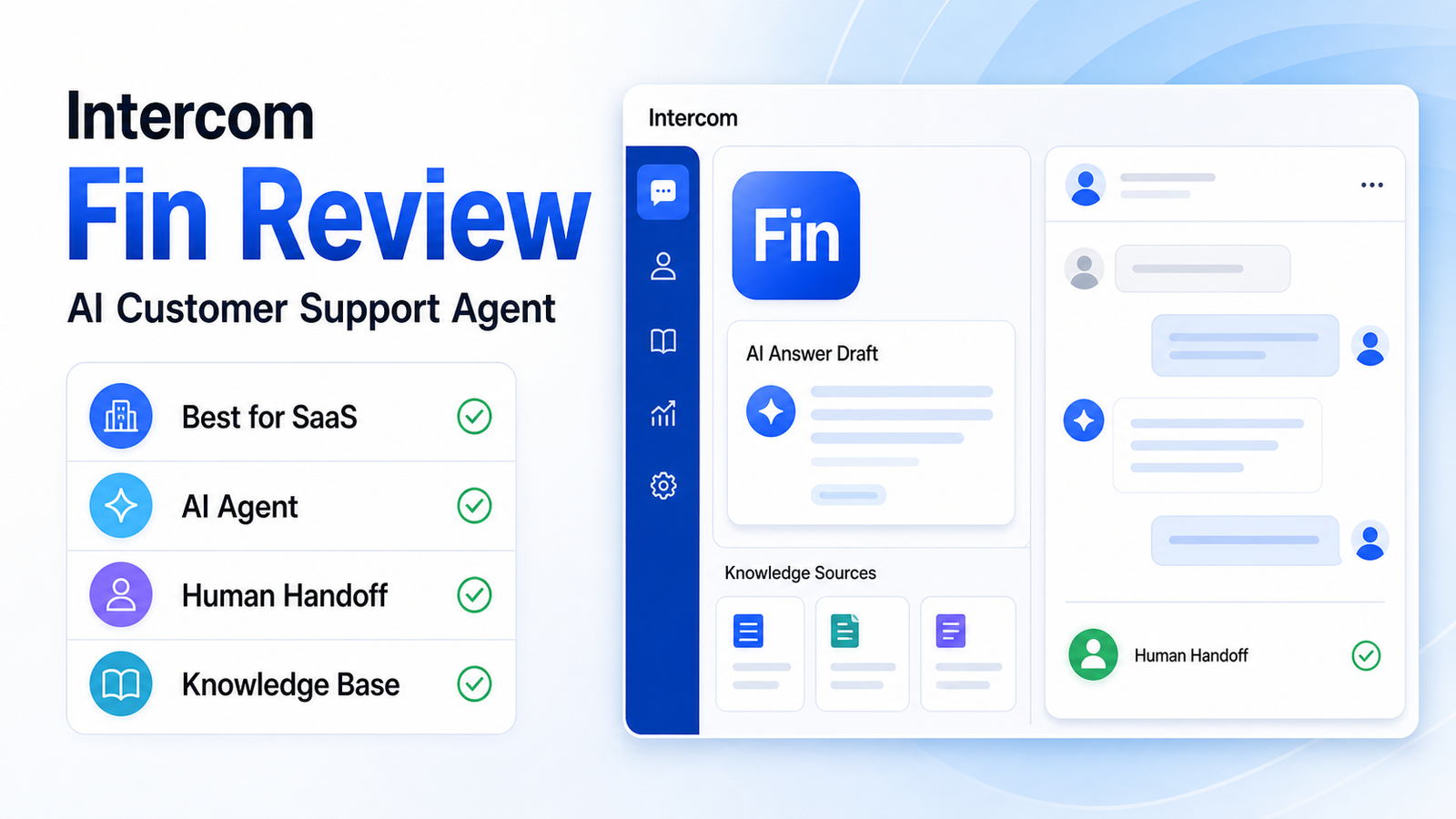
    Intercom Fin is worth considering if your team already has strong help content and wants an AI agent to answer common customer questions before a human support agent steps in. It is not the cheapest or simplest support option for every small business, but it can be a strong fit for SaaS, product-led, and chat-first teams that want AI self-service to become a real part of support.

    The short verdict: Intercom Fin is best for teams with repeatable support questions, a maintained help center, and enough conversation volume to justify outcome-based AI support. It is less ideal for very small teams with only a few support conversations per week, messy documentation, or support issues that always require human judgment.

    This review focuses on fit, strengths, limitations, pricing structure, and when to choose Fin instead of a simpler inbox or a traditional help desk. If you are comparing several platforms, our best AI customer support tools guide gives a wider shortlist.

    Quick Verdict

    Review Area Verdict
    Best for SaaS and product-led teams with repetitive support questions
    Main strength AI-agent-first support connected to knowledge sources and human handoff
    Main limitation Works best when your help content is already clean and complete
    Pricing model Outcome-based Fin pricing plus Intercom platform plan requirements
    Best alternative for simplicity Help Scout
    Best alternative for full help desk depth Zendesk

    What Is Intercom Fin?

    Intercom Fin is Intercom's AI customer support agent. It is designed to answer customer questions using approved knowledge sources, then hand over to human agents when the question needs human support.

    That positioning matters. Fin is not just an agent-assist writing feature. It is meant to sit in front of support conversations and resolve eligible questions. For teams that receive the same onboarding, billing, troubleshooting, and account questions every day, that can reduce repetitive work and give customers faster answers.

    Intercom also publishes guidance around knowledge sources for AI agents and self-serve support. That is important because Fin's value depends heavily on the quality of the information it can draw from.

    Who Intercom Fin Is Best For

    Intercom Fin is strongest for businesses that already think of support as a product experience. That usually includes SaaS companies, app businesses, product-led growth teams, and online services where customers ask many repeatable questions.

    Fin is a good fit when:

    • your support team handles the same questions repeatedly
    • your help center is reasonably complete
    • support happens through chat or messaging
    • customers expect fast answers
    • human agents need fewer repetitive tickets
    • you can maintain knowledge sources over time

    Fin is not the best first step if your business has no help center, no documented policies, and very low support volume. In that case, the real bottleneck is not AI. It is support content and process.

    Core Features That Matter

    AI Answers From Knowledge Sources

    The main reason to choose Fin is AI answering. It can use approved support content to answer customer questions. For a small SaaS team, this can be useful for onboarding questions, feature explanations, account setup, and basic troubleshooting.

    The key condition is content quality. If your knowledge base is outdated or vague, the AI experience will be weaker. Fin does not remove the need to maintain help content. It makes that content more valuable.

    Human Handoff

    A good AI support tool should know when not to answer. Fin is useful because it sits inside Intercom's broader support environment, where customers can be handed to human agents when needed.

    This is important for sensitive issues such as billing disputes, account access, cancellation problems, technical bugs, and angry customers. A support tool should reduce repetitive work without making customers feel trapped.

    Support Inbox Context

    Because Fin is part of Intercom, teams can use it alongside customer conversations, support workflows, and help center content. This makes it more practical than a standalone chatbot that does not fit into the agent workflow.

    For many teams, the deciding factor is not whether the AI can write a nice answer. It is whether the answer, escalation, and conversation history live in the same support system.

    Outcome-Based Pricing

    Intercom's official pricing page presents Fin with outcome-based pricing. This means teams should evaluate Fin based on how many useful AI resolutions it can produce, not only the monthly software subscription.

    That model can be attractive if Fin resolves enough repetitive questions. It can feel less attractive if your volume is low, your questions are complex, or customers frequently need human escalation.

    Pros And Cons

    Pros Cons
    Strong fit for AI-first support Requires clean support content to work well
    Good for chat-first SaaS teams May be more than a tiny team needs
    Human handoff is part of the support flow Pricing should be modeled against real support volume
    Useful for repetitive onboarding and product questions Not ideal for support that always requires human judgment
    Works inside Intercom's broader customer communication system Teams must maintain knowledge sources over time

    Where Fin Works Best

    Fin works best when support questions are frequent, repeatable, and answerable from source content. Examples include account setup, feature usage, plan limits, onboarding steps, product documentation, policy questions, and common troubleshooting.

    A SaaS team with hundreds or thousands of monthly support conversations could use Fin to reduce repetitive tickets while keeping human agents focused on complex cases. A small ecommerce store could use an AI chat tool too, but Intercom Fin is most compelling when support is tied to a product experience rather than only order questions.

    Where Fin May Not Be The Right Choice

    Fin is not a magic layer over messy support. If the business has unclear policies, incomplete docs, or a product that requires custom answers for every customer, Fin will have less room to help.

    It may also be too much for very small teams that only answer a handful of emails each week. In that case, a simpler shared inbox or lighter support tool may be a better starting point.

    Avoid Fin if:

    • your help center is not ready
    • most questions require judgment or account review
    • support volume is too low to justify AI outcomes
    • your team wants only a basic email inbox
    • you are not ready to monitor AI answer quality

    Intercom Fin Pricing: What To Know

    Fin uses outcome-based pricing, so the real question is whether the AI agent can resolve enough support conversations to make the cost worthwhile. Intercom's pricing page should be treated as the source of truth for current plan requirements and Fin outcome pricing.

    For a small business, the pricing decision should start with three numbers:

    1. monthly support conversation volume 2. percentage of questions that are repetitive and answerable from documentation 3. expected human time saved per useful AI resolution

    If your team receives many repeated questions, Fin can make sense faster. If volume is low or support questions are mostly custom, the value case is weaker.

    Intercom Fin vs Simpler Support Tools

    Intercom Fin is not trying to be the simplest support inbox. It is a better fit for teams that want AI self-service and customer messaging to be a strategic part of support.

    Choose Fin over a simpler inbox if:

    • live chat is central to customer support
    • the product has repeatable support questions
    • customers expect immediate answers
    • your team can maintain support articles
    • AI resolution is a business priority

    Choose a simpler tool instead if your team mainly wants a clean shared inbox, basic docs, and light AI writing assistance.

    Buying Checklist Before You Choose Fin

    Before choosing Fin, do a simple readiness check. List your top support questions, confirm that each answer exists in your help center, and decide which questions should always go to a human. Then estimate how many monthly conversations are repetitive enough for an AI agent to handle. This gives you a cleaner value model than comparing AI features in isolation.

    A team that already maintains documentation will get more value from Fin than a team that expects the AI agent to fix missing policies. Treat Fin as a support layer on top of good knowledge management, not as a replacement for the support knowledge itself.

    Final Verdict

    Intercom Fin is a strong AI customer support agent for teams that are ready for it. The product makes the most sense when support content is organized, customer questions repeat often, and the team wants AI to resolve conversations rather than only help agents draft replies.

    It is not the right first step for every small business. If your documentation is weak, fix that first. If support volume is low, start with a simpler inbox. But if your team has enough repetitive questions and wants AI self-service as a serious support channel, Intercom Fin deserves a close look.

    FAQs

    Is Intercom Fin good for small business?

    Intercom Fin can be good for small businesses with enough support volume and clean help content. It is less ideal for very small teams with only a few weekly conversations or support issues that always need human judgment.

    What does Intercom Fin do?

    Fin answers customer questions using approved knowledge sources and can hand conversations to human agents when needed. It is designed as an AI support agent rather than only an agent-writing assistant.

    Is Intercom Fin a chatbot?

    Fin behaves like an AI support agent inside customer conversations. It is more advanced than a simple rules-based chatbot because it can use knowledge sources to generate answers, but it still needs strong source content and oversight.

    How is Intercom Fin priced?

    Intercom presents Fin with outcome-based pricing on its official pricing page. Teams should model the cost against support volume, expected AI resolutions, and the amount of repetitive agent work that can be reduced.

    Does Intercom Fin replace support agents?

    Fin can reduce repetitive tickets, but it should not replace human agents for sensitive, complex, billing, account, or relationship-heavy support. The best setup uses Fin for common questions and humans for judgment.

    What is the biggest limitation of Intercom Fin?

    The biggest limitation is knowledge quality. If the help center is outdated, thin, or unclear, the AI agent has less reliable information to work from. Fin works best when support content is maintained like a real product asset.

    Who should avoid Intercom Fin?

    Teams should avoid Fin if they have low support volume, no help center, highly customized support issues, or no process for reviewing AI answer quality. Those teams may get more value from improving documentation and support operations first.

    What are the best Intercom Fin alternatives?

    Zendesk is better for broader help desk depth, Help Scout is better for a simpler shared inbox, Freshdesk is useful for budget-conscious ticketing, and Tidio Lyro is a focused option for ecommerce chat automation.

  • Best AI Customer Support Tools for Small Business

    Best AI Customer Support Tools for Small Business

    Small businesses do not need the most complicated support platform. They need a customer support tool that can answer common questions, organize conversations, protect the team from inbox chaos, and still let a human step in when the issue matters.

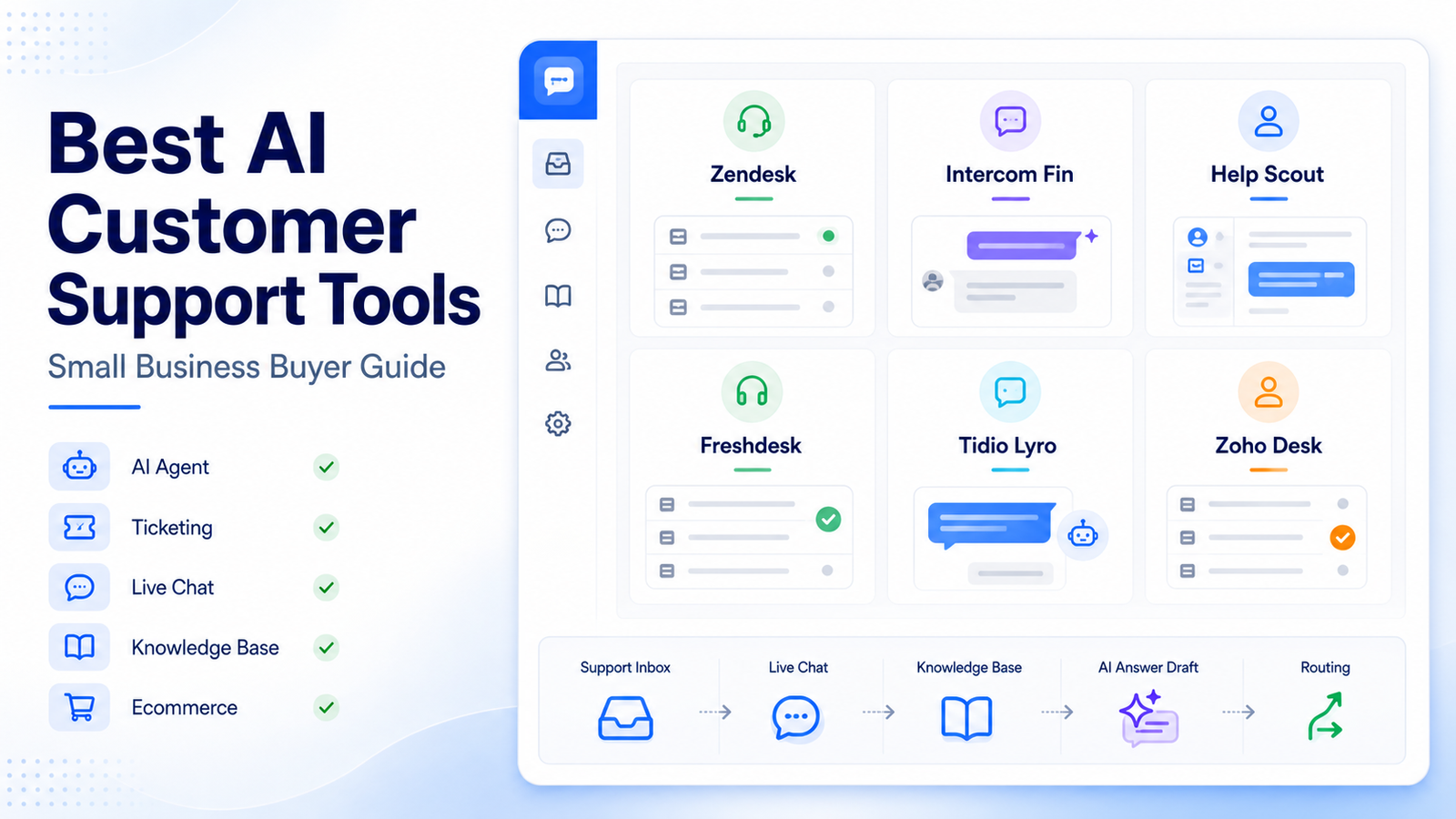
    For most teams, the best AI customer support tools fall into six practical groups: full help desk platforms, AI-agent-first platforms, simple shared inboxes, budget ticketing systems, ecommerce chat tools, and ecosystem tools for companies already using a broader business suite.

    Here is the short version: choose Zendesk if your support operation is growing and needs serious ticketing depth. Choose Intercom Fin if you want an AI agent at the center of support. Choose Help Scout if you want a simple, human-feeling support inbox with AI assistance. Choose Freshdesk if you need a budget-conscious help desk with automation. Choose Tidio Lyro if ecommerce live chat is your priority. Choose Zoho Desk Zia if your company already uses Zoho and wants support inside that ecosystem.

    If your team is still designing the process around the software, our AI customer support workflow guide is a useful companion. This article focuses on the software shortlist.

    Quick Comparison: Best AI Customer Support Tools

    Tool Best For Main Strength Watch Out For
    Zendesk Growing support teams Mature ticketing, AI agents, routing, knowledge base, analytics Can feel bigger than a very small team needs
    Intercom Fin AI-first support teams Strong AI agent experience connected to help center content Best when your support content is already clean and maintained
    Help Scout Small teams that value simplicity Shared inbox, docs, customer context, and AI help without heavy complexity Less suited to very complex enterprise routing
    Freshdesk Budget-conscious support teams Ticketing, automation, Freddy AI features, multichannel support Advanced AI and automation may depend on plan fit
    Tidio Lyro Ecommerce and chat-heavy teams Live chat, chatbot automation, Lyro AI agent for common questions Not a full replacement for deep help desk operations
    Zoho Desk Zia Zoho ecosystem users Help desk plus Zia AI inside the broader Zoho suite Best fit when your team already likes Zoho products

    How To Choose The Right AI Support Tool

    Before comparing features, decide what problem you are actually solving. A two-person ecommerce team with many repetitive shipping questions needs a different tool than a SaaS company managing account issues, billing questions, and product bugs.

    Use these criteria first:

    • Ticket volume: if volume is high, prioritize routing, assignment, SLAs, reporting, and a strong knowledge base.
    • Support channels: if most conversations happen through chat, prioritize live chat and AI agent handoff. If email is the main channel, a shared inbox may be enough.
    • Knowledge base quality: AI support works best when help articles are accurate, current, and easy to retrieve.
    • Human handoff: the tool should make escalation clear instead of trapping customers in automation.
    • Team size: small teams need fast setup. Larger teams need controls, analytics, permissions, and routing.
    • Ecommerce fit: stores need chat, order context, and fast answers around shipping, returns, and product questions.

    The mistake many small businesses make is buying the tool with the longest feature list. A better approach is to choose the tool that matches your support maturity for the next 12 months.

    1. Zendesk: Best Overall For Growing Support Operations

    Zendesk is the strongest choice when your support team is moving beyond a basic inbox. It is built around ticketing, customer conversations, help center content, routing, reporting, and AI support features that can scale with a growing team.

    Zendesk is a good fit when you have several agents, multiple support channels, or a support process that needs clear ownership. Its AI agent and automation features are useful when common issues can be answered from a maintained help center, while more complex tickets still need escalation to human agents.

    Why Zendesk Works Well

    Zendesk is useful because it does not treat AI as a separate toy. AI can sit inside a broader support operation that already includes tickets, macros, routing, knowledge base content, customer history, and reporting. That matters for small businesses that are growing quickly and do not want to rebuild the support stack later.

    Zendesk is especially strong for teams that need:

    • email, messaging, and help center support in one system
    • AI answers based on support content
    • routing and assignment logic
    • reporting for managers
    • room to grow into more advanced support operations

    Where Zendesk May Be Too Much

    Zendesk can be more platform than a tiny team needs. If you only answer a few emails per day, a lighter tool may feel faster. Zendesk makes the most sense when support already has structure or when the team knows that volume will grow.

    Choose Zendesk if you want a long-term customer service platform. Avoid it if you mainly need a lightweight live chat widget or a very simple shared inbox.

    2. Intercom Fin: Best For AI-Agent-First Support

    Intercom Fin is designed for teams that want AI to answer a meaningful share of customer questions before a human agent steps in. It works best when your help center, product docs, and support content are already clean enough for an AI agent to use safely.

    Intercom is a strong option for SaaS businesses, product-led companies, and teams that care about conversational support. Fin can fit into a support setup where customers ask questions through chat, and the support team wants fewer repetitive tickets without losing the human handoff.

    Why Intercom Fin Works Well

    Intercom Fin is compelling because it is built around the idea that an AI agent should be part of the support experience, not just a writing assistant. That makes it useful for teams with repeated questions about onboarding, billing, account settings, product limits, or troubleshooting steps.

    Intercom is especially useful when you need:

    • AI answers from approved support content
    • a modern chat-first customer experience
    • human handoff when AI cannot resolve the issue
    • support workflows tied to product conversations
    • a polished customer-facing support interface

    Where Intercom Fin May Not Fit

    Intercom Fin depends heavily on the quality of the knowledge sources behind it. If your help content is outdated, incomplete, or scattered, the AI experience can become weaker. It is also not the simplest option for teams that only need a low-cost inbox.

    Choose Intercom Fin if AI self-service is a top priority. Avoid it if your support documentation is not ready yet or if ticketing depth matters more than chat automation.

    3. Help Scout: Best Simple AI Support Inbox

    Help Scout is a good fit for small businesses that want support to feel personal, organized, and easy for the team to manage. It combines a shared inbox, help center, customer context, and AI assistance without making the software feel like an enterprise ticketing maze.

    Help Scout is especially attractive for founder-led teams, service businesses, agencies, and small SaaS teams that want to improve response quality without adding too much process.

    Why Help Scout Works Well

    Help Scout is strong because it keeps the support experience simple. The AI features are useful for improving replies, summarizing context, and helping agents work faster, but the product still feels centered on human support.

    Help Scout is a good match when your team needs:

    • a clean shared inbox
    • docs and self-service content
    • customer context in conversations
    • AI support for response quality and speed
    • a support system that non-technical team members can learn quickly

    Where Help Scout May Not Fit

    Help Scout is not the first tool I would pick for a complex support operation with heavy routing, deeply customized SLAs, and many layers of reporting. It is best for teams that value simplicity and customer tone over heavy operational complexity.

    Choose Help Scout if you want a calm support workspace. Avoid it if you need the most advanced enterprise-style help desk controls.

    4. Freshdesk: Best Budget-Conscious AI Help Desk

    Freshdesk is a practical choice for small businesses that need ticketing, automation, and AI support features without immediately jumping into a heavier enterprise stack. Freshdesk sits inside the Freshworks product family and includes Freddy AI capabilities across support experiences.

    Freshdesk is a good fit for support teams that need a traditional help desk structure with room for automation, multichannel support, and knowledge base improvements.

    Why Freshdesk Works Well

    Freshdesk is useful because it gives small teams a recognizable help desk structure: tickets, agents, channels, rules, and customer conversations. Freddy AI can help with support automation and agent assistance depending on the product setup and plan.

    Freshdesk is worth considering when you need:

    • structured ticket management
    • automation for repetitive support work
    • multichannel customer conversations
    • knowledge base and self-service support
    • a support platform that can start lean and grow

    Where Freshdesk May Not Fit

    Freshdesk can require configuration work if your support process has many rules. Some AI and automation capabilities may also depend on plan selection, so the tool should be evaluated against the features your team actually needs.

    Choose Freshdesk if you want a capable help desk with AI assistance. Avoid it if your team wants only a lightweight chat widget or a very minimal inbox.

    5. Tidio Lyro: Best For Ecommerce Chat Automation

    Tidio Lyro is built for teams that want AI chat automation for common customer questions. It is especially relevant for ecommerce stores where shoppers ask about products, shipping, returns, discounts, and order-related questions.

    Tidio is a better fit for chat-heavy teams than for companies that need deep help desk reporting or complex back-office ticket workflows.

    Why Tidio Lyro Works Well

    Tidio Lyro is useful when the main goal is to answer common questions quickly on the website. For small stores, that can reduce repetitive chat work and help customers get answers without waiting for a support agent.

    Tidio Lyro is a good match when you need:

    • live chat on your website
    • AI responses for repetitive questions
    • ecommerce-friendly customer conversations
    • simple setup compared with larger help desk platforms
    • automation for pre-sale and post-sale questions

    Where Tidio Lyro May Not Fit

    Tidio Lyro should not be treated as a complete help desk replacement for every business. If you need advanced ticket routing, SLAs, multi-team workflows, or deep reporting, Zendesk, Freshdesk, or Zoho Desk may fit better.

    Choose Tidio Lyro if chat automation and ecommerce support matter most. Avoid it if ticket operations are the center of your support process.

    6. Zoho Desk Zia: Best For Teams Already Using Zoho

    Zoho Desk Zia is the best fit for businesses already using Zoho products. Zia brings AI assistance into Zoho Desk, while Zoho Desk provides the support system around tickets, agents, customers, and reporting.

    For companies already using Zoho CRM, Zoho Workplace, Zoho Books, or other Zoho apps, staying inside the same ecosystem can make support easier to connect with sales and operations.

    Why Zoho Desk Zia Works Well

    Zoho Desk is useful for teams that want support data connected to the wider business. Zia can help with AI assistance inside that support environment, while Zoho Desk provides the operational help desk foundation.

    Zoho Desk Zia is a good match when you need:

    • help desk software inside the Zoho ecosystem
    • AI assistance connected to support operations
    • ticketing, customer context, and reporting
    • a familiar interface for teams already using Zoho
    • support processes connected to CRM or business apps

    Where Zoho Desk Zia May Not Fit

    Zoho Desk is most attractive when your team already wants to use Zoho. If your company is not in the Zoho ecosystem and wants the most polished AI-agent-first experience, Intercom Fin may be a stronger shortlist choice.

    Choose Zoho Desk Zia if Zoho is already part of your business stack. Avoid it if you want a standalone chat-first AI support product.

    Best Tool By Use Case

    Use Case Best Pick Why
    Best overall for growing support teams Zendesk Strong help desk foundation with AI and routing depth
    Best AI-agent-first support Intercom Fin Built around AI answering customer questions from support content
    Best simple inbox Help Scout Easy shared inbox and docs experience for small teams
    Best budget-conscious help desk Freshdesk Practical ticketing and automation for teams watching cost
    Best ecommerce chat automation Tidio Lyro Strong fit for website chat and common store questions
    Best for Zoho users Zoho Desk Zia Fits naturally into the Zoho business ecosystem

    What Most Small Businesses Get Wrong

    The biggest mistake is adding AI before the support content is ready. AI customer support tools are only as useful as the answers, policies, help articles, and routing rules they can rely on.

    Before buying, make sure your team has:

    • clear answers for the top 20 support questions
    • updated refund, cancellation, shipping, billing, or account policies
    • a simple escalation rule for sensitive issues
    • ownership for maintaining help articles
    • a plan for measuring answer quality and unresolved tickets

    If you skip that work, even a strong AI support tool can feel disappointing. If you do it well, a smaller tool can sometimes outperform a bigger platform because the source content is cleaner.

    For teams that also want to analyze support themes after conversations happen, the AI customer feedback analysis workflow can help turn tickets and reviews into product insights.

    Final Recommendation

    If you want the safest overall choice for a growing support operation, start with Zendesk. It gives you the most room to grow into serious customer service operations.

    If your main goal is to automate support answers with an AI agent, Intercom Fin should be high on the shortlist. If your team wants simplicity and human tone, Help Scout is easier to like. If you need structured ticketing with budget awareness, Freshdesk deserves a close look. If ecommerce chat is the main channel, Tidio Lyro is the more focused pick. If your business already runs on Zoho, Zoho Desk Zia is the natural option.

    The right choice is not the tool with the most AI branding. It is the tool that matches your support channels, customer questions, documentation quality, and team size.

    FAQs

    What is the best AI customer support tool for small business?

    Zendesk is the strongest overall pick for growing support teams, while Help Scout is better for teams that want a simpler inbox. Intercom Fin is best when AI self-service is the main priority, and Tidio Lyro is best for ecommerce chat automation.

    Which AI customer support tool is best for ecommerce?

    Tidio Lyro is a strong fit for ecommerce teams that need live chat and AI answers for common store questions. Zendesk and Freshdesk can also work for ecommerce teams that need deeper ticketing and multichannel support.

    Is Intercom Fin better than Zendesk?

    Intercom Fin is better for teams that want an AI-agent-first support experience. Zendesk is better when the business needs a broader help desk platform with ticketing, routing, reporting, help center operations, and room to scale.

    Is Help Scout good for AI customer support?

    Help Scout is good for small teams that want AI assistance inside a simple support inbox. It is not the most complex enterprise help desk, but that simplicity is exactly why many smaller teams consider it.

    Should small businesses use AI chatbots for support?

    Small businesses should use AI chatbots when they have clear, repeatable questions and accurate support content. AI is less useful when policies are unclear, questions are highly sensitive, or every customer issue requires custom judgment.

    What should I check before buying AI support software?

    Check your support channels, ticket volume, help center quality, escalation needs, team size, reporting needs, and integration requirements. The tool should match your actual support process, not just the longest feature list.

    Can AI customer support tools replace human agents?

    They can reduce repetitive work, but they should not replace human support for sensitive, complex, billing, account, or relationship-heavy issues. The best setup uses AI for common questions and human agents for judgment.

    Which tool is easiest for a small team to start with?

    Help Scout is usually the easiest if the team wants a shared inbox and docs. Tidio can be easier if the main need is website chat. Zendesk, Freshdesk, and Zoho Desk are better when the team needs more help desk structure.

  • How to Build an AI Customer Support Workflow: Triage, Answers, Escalation, and QA

    How to Build an AI Customer Support Workflow: Triage, Answers, Escalation, and QA

    Quick Answer

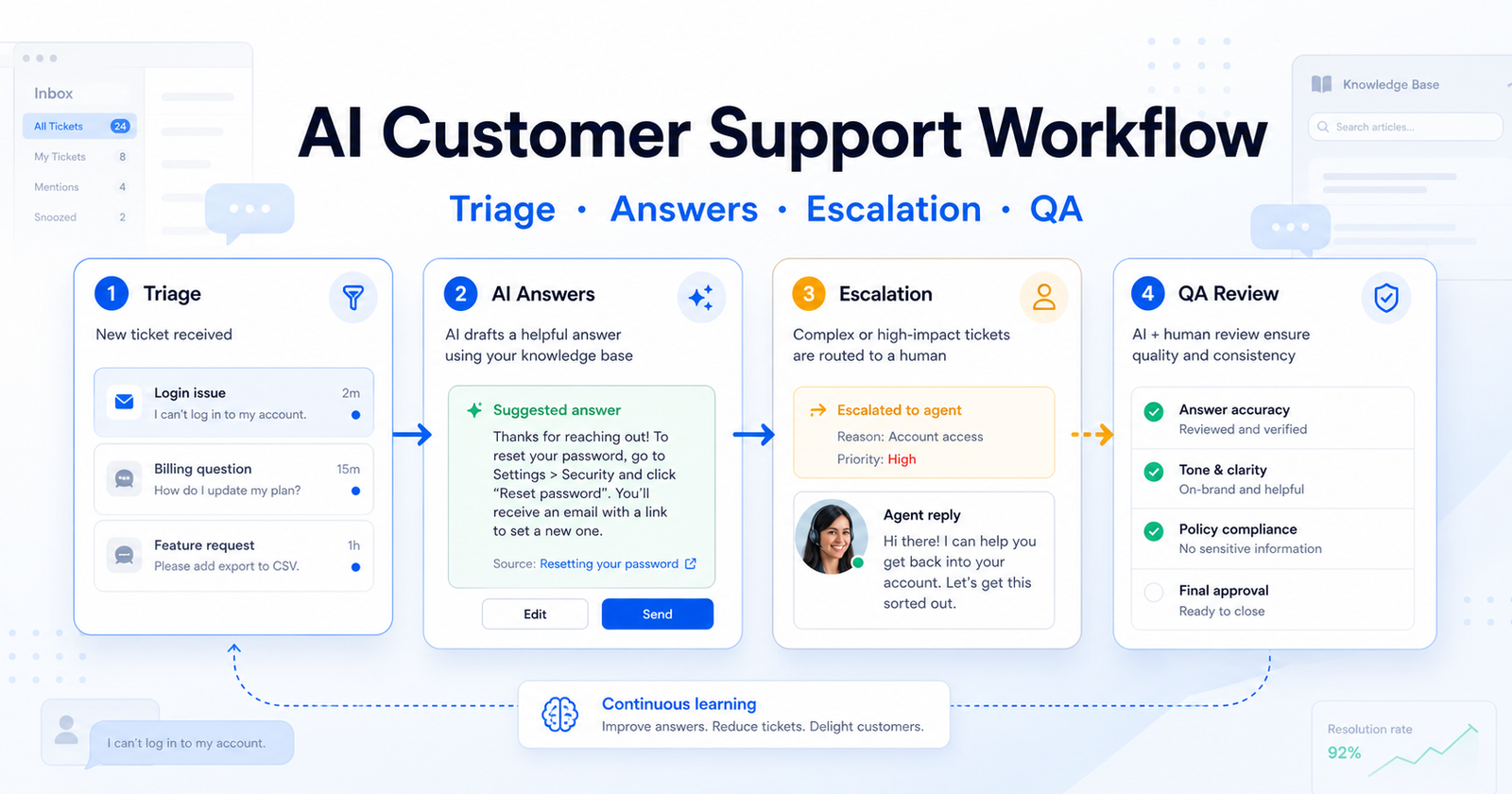
    A useful AI customer support workflow has four stages: triage the request, draft or deliver the answer, escalate risky cases to a human, and review quality after the conversation. The goal is not to let AI answer everything. The goal is to let AI handle repeatable requests while humans keep control over exceptions, customer trust, and policy-sensitive decisions.

    For most small teams, the safest setup is a help center, a shared inbox, an AI agent or answer assistant, a human handoff rule, and a weekly QA review. Intercom and Zendesk both publish AI support options, but the same workflow can also apply to other helpdesk tools if they support knowledge-base answers, routing, and review.

    If your support work connects to automation platforms, our Zapier vs Make comparison can help you decide how to move support events into other systems.

    Workflow Summary

    Stage Goal AI Role Human Role
    Triage Understand request type, urgency, and customer context Classify topic, summarize history, suggest priority Define rules and review edge cases
    Answer Resolve simple questions quickly Draft or deliver answers from approved knowledge Approve policies, update help content, handle unclear cases
    Escalation Prevent bad automation decisions Handoff when confidence, billing, security, or emotion requires care Own refunds, exceptions, complaints, and relationship-sensitive cases
    QA review Improve the system over time Score conversations, find content gaps, surface repeated issues Fix macros, docs, routing, and escalation rules

    Step 1: Start With Support Categories

    Before choosing a tool, divide support work into categories. Common buckets include billing, login problems, setup questions, plan limits, bugs, refunds, integrations, feature requests, and account security.

    AI works best when each bucket has clear source material. For example, a password-reset question can use a help-center article. A refund request may need policy logic and human review. A customer who says they are about to cancel may need an account manager, not a generated answer.

    This is where many teams get customer support AI wrong. They start with the tool instead of the support map. The result is an AI assistant that answers easy questions but mishandles edge cases because nobody defined the edges.

    Step 2: Build the Knowledge Base First

    An AI support workflow is only as good as the information it can use. Create or clean up articles for the top 20-30 repeated questions before you automate answers. Each article should have one clear answer, updated screenshots if needed, and ownership.

    Good source content includes setup guides, billing policies, troubleshooting steps, plan limits, integration instructions, refund rules, and escalation notes. Poor source content includes outdated FAQs, vague policy pages, internal chat explanations, and undocumented exceptions.

    A practical example: a small SaaS team with 80 weekly tickets might find that 35 tickets are about login, billing, and setup. Those categories are safe candidates for first-pass automation. Security complaints, enterprise billing, and angry cancellation tickets should stay human-led until the team has clear policies.

    Step 3: Choose the AI Layer

    There are two common approaches.

    The first approach is an AI-first support platform. Intercom's pricing page lists Fin AI Agent in its Essential, Advanced, and Expert plans, with Fin priced from $0.99 per outcome and seat pricing by plan. Intercom also lists a standalone Fin AI Agent option for teams that already have a helpdesk.

    The second approach is adding AI to a helpdesk suite. Zendesk's pricing page lists support and suite plans, AI agents, Copilot, quality assurance, routing, ticketing, messaging, live chat, and help center features. Zendesk also describes AI agent resolutions and add-ons as cost components.

    Do not choose only by feature count. Choose by where your support team already works, how clean your help center is, how many tickets are repetitive, and how often customers need a human decision.

    Step 4: Define Handoff Rules

    Handoff rules protect trust. AI should escalate when the request involves refunds, legal terms, security, account access, angry sentiment, medical or financial claims, enterprise contracts, repeated failed answers, or anything the company has not documented.

    A simple rule set could look like this:

    Trigger Action
    Customer asks for refund Route to billing queue
    AI cannot find a source answer Send to human support
    Customer mentions security issue Escalate to priority queue
    Customer asks a plan-limit question Answer from pricing/docs if source is approved
    Customer repeats the same question Handoff after one failed AI response
    Customer is angry or threatening churn Handoff to senior support or success owner

    The hidden limitation is that AI can sound confident even when the underlying policy is unclear. Handoff rules are the guardrail that prevents a polished but wrong answer.

    Step 5: Add Human Review Before Full Automation

    Do not launch full auto-answering on day one. Start with AI drafts that agents approve. After the team sees repeated correct drafts, move low-risk categories to direct AI responses.

    A staged rollout works well:

    1. Week one: AI drafts answers only. 2. Week two: AI answers password, setup, and simple how-to questions. 3. Week three: AI handles more categories with confidence and source checks. 4. Week four: QA reviews missed cases and updates help articles.

    This approach gives the team evidence from its own inbox without pretending to run a scientific test. It also shows which help-center articles need fixing before automation expands.

    Step 6: Connect Support to Other Systems Carefully

    Support workflows often need CRM notes, billing flags, bug reports, and product feedback. AI can help summarize the ticket, but automation should move only structured, reviewed information into other systems.

    For example, a support ticket about a broken integration can become a product bug report after an agent confirms the issue. A churn-risk conversation can update the CRM after a success manager reviews the summary. A repeated setup issue can become a documentation task.

    Do not let AI create noisy tasks for every conversation. That creates more work than it saves.

    Step 7: Run Weekly QA

    A good QA review asks practical questions:

    • Did the AI answer from approved source material?
    • Were any answers technically correct but unhelpful?
    • Which tickets should have escalated earlier?
    • Which help articles caused confusion?
    • Which categories are safe to automate next?
    • Which automations created unnecessary work?

    This is also where support leaders should update macros, help articles, routing rules, and escalation triggers. AI support improves when the operating system around it improves.

    When AI Support Is Not the Right Choice

    AI support is not the right first move if your product changes every week, your help center is outdated, your support policies are undocumented, or most tickets require negotiation. It is also risky when customers ask about regulated decisions, security, billing exceptions, or account ownership.

    In those cases, build the support knowledge base and escalation process first. Then add AI to the safest categories.

    Final Recommendation

    Use AI support for repeatable questions, routing, summarization, and quality review. Keep humans in charge of exceptions, emotional conversations, policy decisions, and account-sensitive issues.

    The best workflow is not the one with the most automation. It is the one where customers get faster answers without losing the option to reach a capable human when the situation needs judgment.

    FAQs

    What is an AI customer support workflow?

    It is a structured process that uses AI to triage requests, draft or deliver answers, route tickets, escalate risky issues, and review support quality. The workflow should define where AI can answer directly and where a human must take over.

    Should AI answer customers automatically?

    Only for categories with clear source material, low risk, and strong escalation rules. Many teams should start with AI drafts for human approval before allowing direct AI responses.

    What should be in the knowledge base before using AI support?

    Start with articles for login, billing, setup, integrations, plan limits, troubleshooting, refunds, and security basics. Each article should be accurate, specific, and owned by someone who can keep it updated.

    When should AI escalate to a human?

    Escalate when the answer is uncertain, the customer is upset, money or account access is involved, the policy is unclear, or the request involves legal, security, privacy, or enterprise terms.

    Is Intercom Fin enough by itself?

    Fin can be useful when the team has clean support content and clear outcome goals. It is not a replacement for support operations, documentation ownership, escalation rules, and QA.

    Is Zendesk better for larger support teams?

    Zendesk can be a strong fit for teams that need ticketing, routing, live chat, help center, AI agents, Copilot, quality assurance, and enterprise workflows in a broader support suite. The right choice depends on your existing stack and support process.

    What is the biggest mistake with AI support?

    The biggest mistake is automating before defining support categories, source content, and escalation rules. That creates confident answers but not necessarily correct or trusted support.

    How do you measure whether the workflow is working?

    Track resolution rate, escalation rate, reopened tickets, customer satisfaction, article gaps, agent edits to AI drafts, and the number of unnecessary tasks created by automation. These show whether AI is helping or adding noise.

  • ElevenLabs vs WellSaid Labs: Which AI Voice Generator Should You Choose?

    ElevenLabs vs WellSaid Labs: Which AI Voice Generator Should You Choose?

    Quick Verdict

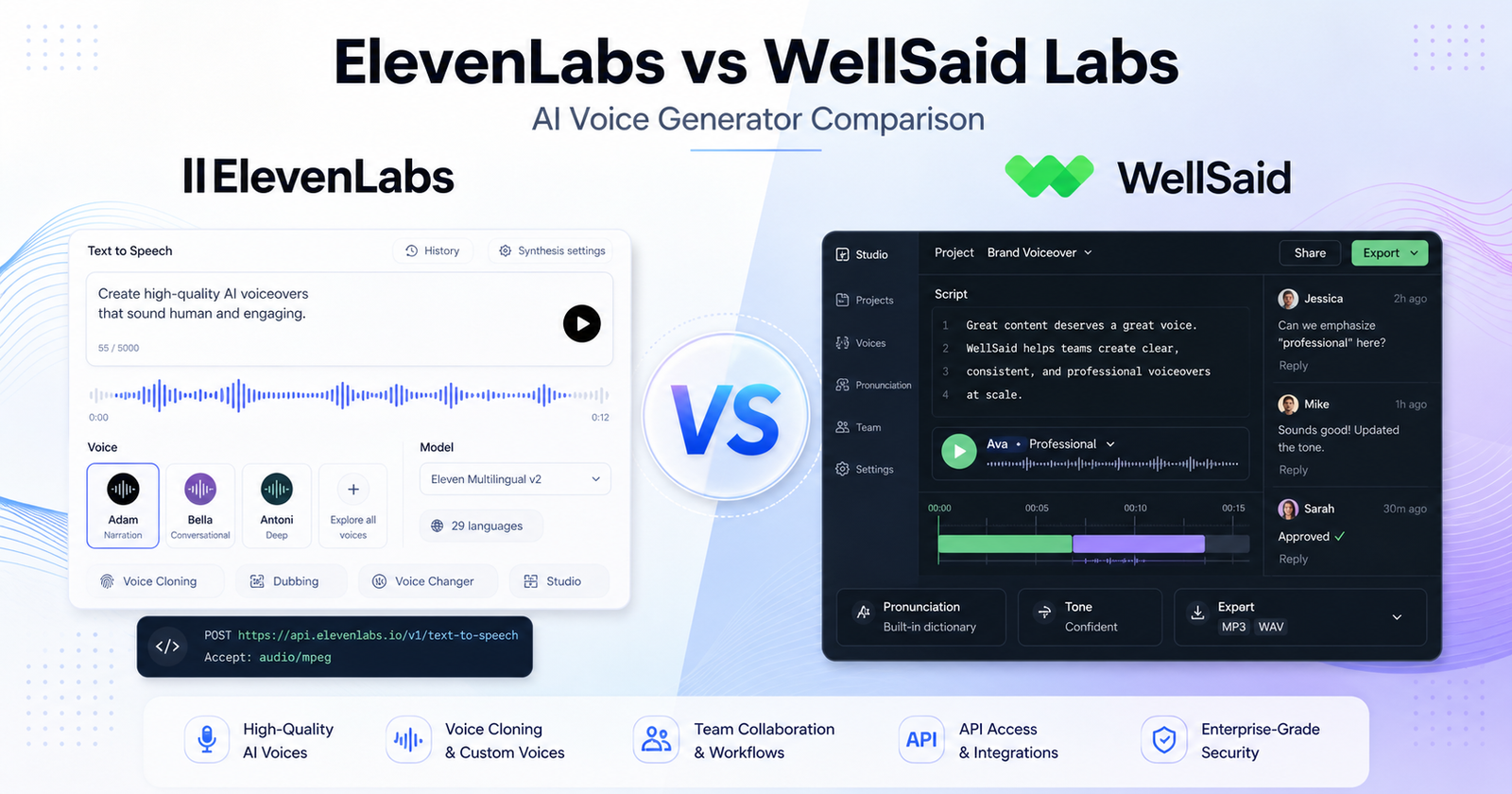
    ElevenLabs vs WellSaid Labs comes down to flexibility versus controlled business voice production. ElevenLabs is the better choice if you want a wide AI voice platform for text to speech, voice cloning, dubbing, multilingual generation, API access, and creator-friendly pricing. WellSaid Labs is the better choice if your team wants a polished voiceover studio for training, marketing, internal content, brand-controlled voice assets, pronunciation control, and collaboration.

    Choose ElevenLabs if you want more experimentation, more plan levels, lower starting prices, and developer-friendly voice generation. Choose WellSaid Labs if you need business-ready studio workflows, team review, consistent narration, and enterprise voice governance.

    Both can create professional voiceovers. The difference is that ElevenLabs feels broader and more creator/developer oriented, while WellSaid Labs feels more focused on production teams that need approved voice content at work.

    Quick Comparison

    Comparison Point ElevenLabs WellSaid Labs
    Best for Creators, developers, media teams, localization, voice cloning, dubbing, and API voice generation Training teams, marketing teams, internal communications, brand voiceovers, and team review workflows
    Main product focus Generative AI audio platform with text to speech, voice cloning, dubbing, speech to speech, voice changer, and API AI voiceover studio for creating, editing, reviewing, and exporting professional narration
    Voice workflow Generate voices from text, clone voices, dub content, build audio apps, and use API workflows Write scripts, select voices, adjust pronunciation/tone, collaborate, and export finished voiceovers
    Pricing entry point Free plan plus Starter at $5/month Free trial plus Creative at $50/month
    Annual discount Starter $4.17/month, Creator $18.33/month, Pro $82.50/month, Scale $275/month, Business $1,100/month Creative $44/month, Business $89/month
    Free access Free plan with 10k credits/month and 15 minutes of text to speech Trial plan with 1 week access and 50 downloads
    Voice cloning Available, including more advanced cloning features on paid plans Voice avatar and custom pronunciation features are more business-studio oriented
    Dubbing/localization Dubbing and multilingual workflows are a major ElevenLabs strength Better for controlled voiceover production than broad dubbing workflows
    API access Strong fit for developers and product teams using API audio generation API access is listed on Business and Enterprise
    Team collaboration Available on higher plans, with Business including workspace and advanced controls Strong team-oriented studio workflow with collaboration and review features
    Enterprise fit Enterprise plan for high-volume and security needs Enterprise plan focused on custom volume, governance, and business deployment
    Ease of creative experimentation Stronger for trying many voices, languages, and audio workflows Stronger for repeatable professional voiceover production
    Best overall match AI voice platform for broad generation and custom audio workflows Business voice studio for consistent, approved voiceovers

    Pricing Comparison

    ElevenLabs and WellSaid Labs use different pricing models. ElevenLabs offers more self-serve tiers and starts at a much lower paid price. WellSaid Labs starts higher, but its plans are aimed at teams that need a production voiceover studio and downloadable finished content.

    Pricing Point ElevenLabs WellSaid Labs
    Free option Free plan Trial plan
    Free/trial limits 10k credits/month and 15 minutes of text to speech 1 week access and 50 downloads
    Lowest paid monthly plan Starter at $5/month Creative at $50/month
    Lowest paid annual plan Starter at $4.17/month billed annually Creative at $44/month billed annually
    Mid-tier plan Creator at $22/month or $18.33/month annually Business at $99/month or $89/month annually
    Higher self-serve plan Pro at $99/month or $82.50/month annually Business is the main public paid team plan before Enterprise
    Scale plan Scale at $330/month or $275/month annually Not listed as a separate public Scale plan
    Business plan Business at $1,320/month or $1,100/month annually Business at $99/month or $89/month annually
    Enterprise plan Enterprise custom plan Enterprise custom plan
    Main pricing unit Credits, usage, seats, and platform capabilities Downloads, studio features, seats/workspace needs, and business controls
    Best budget path Starter for low-cost voice generation Trial first, then Creative for regular voiceover work
    Best team path Creator, Pro, Scale, or Business depending on usage Business for collaboration and API access
    Best enterprise path Enterprise for custom usage and governance Enterprise for custom volume, compliance, and control
    Tool Plan Monthly Price Annual Price Best For Key Limits Or Differences
    ElevenLabs Free $0 $0 Trying AI voice generation 10k credits/month and 15 minutes of text to speech
    ElevenLabs Starter $5/month $4.17/month billed annually Low-cost creators Entry paid tier for regular voice generation
    ElevenLabs Creator $22/month $18.33/month billed annually Creators needing more capacity Higher usage and creator workflows
    ElevenLabs Pro $99/month $82.50/month billed annually Professional creators and teams More credits and higher-volume production
    ElevenLabs Scale $330/month $275/month billed annually Growing audio teams Higher-volume team usage
    ElevenLabs Business $1,320/month $1,100/month billed annually Large business teams High-volume business usage and controls
    ElevenLabs Enterprise Custom Custom Enterprise deployments Custom terms and enterprise requirements
    WellSaid Labs Trial Free Free Trying the studio 1 week access and 50 downloads
    WellSaid Labs Creative $50/month $44/month billed annually Regular creators and small teams Professional voiceover studio access
    WellSaid Labs Business $99/month $89/month billed annually Business voiceover teams Collaboration, API access, and production workflow features
    WellSaid Labs Enterprise Custom Custom Larger organizations Custom volume, governance, and enterprise needs

    Pricing sources checked: 2026-06-13. Sources: ElevenLabs official pricing page and WellSaid Labs official pricing page.

    What Is ElevenLabs?

    ElevenLabs is an AI audio platform for creating speech, voiceovers, dubbed content, cloned voices, sound effects, and audio experiences. Its official product pages focus on realistic text to speech, voice cloning, speech to speech, dubbing, voice changer, studio workflows, and developer API access.

    The biggest advantage of ElevenLabs is range. A creator can generate narration. A developer can build voice into an app. A media team can localize content. A business can use higher tiers for larger audio production workflows.

    ElevenLabs is also easier to enter from a pricing perspective. The Free and Starter tiers make it practical to test voices, experiment with short projects, and then upgrade as usage grows.

    What Is WellSaid Labs?

    WellSaid Labs is an AI voice platform focused on professional voiceover production. Its official site positions the product around creating natural voiceovers for learning, marketing, product, sales, and business communication content.

    WellSaid Labs is less about being a broad generative audio playground and more about helping teams create approved voice content. The studio workflow is built around scripts, voice selection, pronunciation control, revisions, exports, collaboration, and brand consistency.

    This makes WellSaid Labs a strong fit for companies that create repeatable narrated content: training videos, product walkthroughs, internal communications, explainer videos, ads, and course material.

    Feature Comparison

    ElevenLabs is broader. It covers text to speech, voice cloning, voice design, dubbing, speech to speech, voice changer, sound effects, and API-based audio generation. That makes it attractive for creators and developers who want many AI audio options in one platform.

    WellSaid Labs is narrower but more controlled. It focuses on producing professional voiceovers inside a studio environment. The workflow is useful when a team needs a consistent narrator, script review, exports, approved tone, and repeatable content production.

    If the goal is to create many types of audio, ElevenLabs is usually stronger. If the goal is to create consistent business narration with a review process, WellSaid Labs is easier to fit into a professional content team.

    Voice Quality And Control

    Both tools aim for realistic voice output. ElevenLabs is especially strong when users want expressive voices, multilingual options, cloning, and flexible generation. It is a good fit for creators who want different voice styles across different projects.

    WellSaid Labs is built around professional voiceover control. Its studio workflow helps teams manage pronunciation, tone, pacing, and approvals. That matters for training and corporate content where a small pronunciation mistake can make a finished video feel unpolished.

    For creative variety, ElevenLabs has the edge. For structured business voiceover production, WellSaid Labs has the edge.

    API And Developer Use

    ElevenLabs is the stronger choice for developers and product teams. Its platform and pricing structure are more clearly suited to API-driven voice generation, app audio, automated narration, and custom audio products.

    WellSaid Labs also lists API access on business-oriented plans, so it can support integrated workflows. But the product experience is more centered on a studio and business content production rather than developer-first experimentation.

    If you are building an app, voice bot, media pipeline, or internal automation that generates audio at scale, start with ElevenLabs. If you need API access as part of an enterprise content workflow, WellSaid Labs can still be relevant.

    Team And Enterprise Fit

    ElevenLabs becomes more team-oriented as users move into higher plans. The Scale, Business, and Enterprise tiers are better suited to larger usage, governance, and organizational needs.

    WellSaid Labs is business-oriented earlier in the buying journey. Creative is already priced like a professional production tool, and Business is built for teams that need collaboration, API access, and more structured workflows.

    For a small creator, ElevenLabs is more accessible. For a corporate learning team, WellSaid Labs may feel more aligned with daily production needs.

    Pros And Cons Of ElevenLabs

    ElevenLabs Pros

    • Lower-cost entry with Free and Starter plans.
    • Broad AI audio platform with text to speech, voice cloning, dubbing, speech to speech, and API workflows.
    • Strong fit for creators, developers, media teams, and localization workflows.
    • Many public self-serve plan levels, from Free through Business.
    • Better for experimentation across different voices, languages, and audio use cases.
    • Useful for both individual creators and high-volume business teams.

    ElevenLabs Cons

    • Broad feature set can feel like more than a simple business voiceover studio.
    • Credit-based usage requires teams to understand consumption.
    • Business pricing rises sharply for high-volume usage.
    • Teams that need a tightly controlled studio review workflow may prefer WellSaid Labs.

    Pros And Cons Of WellSaid Labs

    WellSaid Labs Pros

    • Strong professional voiceover studio workflow.
    • Good fit for training, marketing, internal communication, and course content.
    • Business-focused plans make sense for teams that need repeatable narration.
    • Collaboration and review workflows are easier to understand for content teams.
    • Better fit when brand voice consistency matters more than broad experimentation.

    WellSaid Labs Cons

    • Higher starting paid price than ElevenLabs.
    • Less attractive for hobbyists or low-volume creators who only need occasional voice generation.
    • Not as broad as ElevenLabs for dubbing, cloning, developer audio apps, or multi-format AI audio experimentation.
    • Enterprise pricing requires a custom conversation.

    Who Should Choose ElevenLabs?

    Choose ElevenLabs if you want a flexible AI voice platform that can grow from simple text to speech into voice cloning, dubbing, API audio, and larger production workflows. It is a strong fit for YouTubers, podcasters, course creators, game developers, app builders, media teams, localization teams, and businesses experimenting with AI audio.

    ElevenLabs is also the better first choice when price flexibility matters. A free plan and low-cost Starter plan let you test the product before committing to higher production tiers.

    Who Should Choose WellSaid Labs?

    Choose WellSaid Labs if your team creates professional voiceovers for business content and needs a more controlled studio process. It is a strong fit for learning and development teams, product marketing teams, sales enablement teams, internal communications teams, and agencies producing brand-sensitive narrated content.

    WellSaid Labs is especially useful when the process matters as much as the voice. If scripts need review, pronunciation needs control, and voice output must feel consistent across many assets, WellSaid Labs is built for that kind of workflow.

    If voiceovers are part of a larger video workflow, our Synthesia vs HeyGen comparison and Descript vs Riverside comparison comparisons can help you choose the right production stack.

    Final Recommendation

    ElevenLabs is the better overall AI voice generator for flexibility, experimentation, developer use, multilingual audio, dubbing, cloning, and lower-cost entry. It gives creators and teams more ways to use AI audio.

    WellSaid Labs is the better choice for business teams that need a polished studio workflow for professional voiceover production. It is more focused, more controlled, and better suited to repeatable branded narration.

    If you want a broad AI audio platform, choose ElevenLabs. If you want a business voiceover studio for approved team content, choose WellSaid Labs.

    FAQs

    Is ElevenLabs better than WellSaid Labs?

    ElevenLabs is better for broad AI audio generation, voice cloning, dubbing, API use, and creator experimentation. WellSaid Labs is better for structured business voiceover production, script workflows, team collaboration, and consistent narration. The better option depends on whether you need a broad AI audio platform or a controlled voiceover studio.

    Is WellSaid Labs better for businesses?

    WellSaid Labs can be better for businesses that create training, marketing, sales, and internal communication content. Its studio workflow is designed for professional voiceover production, reviews, exports, and consistency. ElevenLabs can also serve businesses, but it is broader and more developer/creator friendly.

    Does ElevenLabs have a free plan?

    Yes. ElevenLabs lists a Free plan with 10k credits per month and 15 minutes of text to speech. It is useful for testing voices, short projects, and understanding the platform before moving to a paid plan.

    Does WellSaid Labs have a free plan?

    WellSaid Labs lists a Trial plan rather than a permanent free plan. The official pricing page lists 1 week of access and 50 downloads on the trial, which is useful for testing the studio before choosing a paid plan.

    Which tool is cheaper?

    ElevenLabs is cheaper at the entry level. Starter is listed at $5/month or $4.17/month billed annually. WellSaid Labs Creative is listed at $50/month or $44/month billed annually. WellSaid Labs is priced more like a professional voiceover production tool.

    Which tool is better for voice cloning?

    ElevenLabs is the stronger choice for voice cloning and broader generative voice workflows. Its product ecosystem includes voice cloning, voice design, dubbing, speech to speech, voice changer, and API use. WellSaid Labs is more focused on professional voiceover creation and team production.

    Which tool is better for training videos?

    WellSaid Labs is often better for training videos because it is built around consistent professional voiceover production. It is useful when teams need approved scripts, controlled pronunciation, and repeatable narration. ElevenLabs can also make training narration, especially when teams need multilingual or cloned voice options.

    Which tool is better for developers?

    ElevenLabs is usually better for developers because it has a broader API-oriented AI audio platform and more self-serve tiers. Developers building voice features, apps, automations, or media tools will usually find ElevenLabs more flexible.

    Which tool is better for YouTube creators?

    ElevenLabs is usually better for YouTube creators because it has lower-cost plans, broader voice options, dubbing, voice cloning, and flexible generation workflows. WellSaid Labs can work for creator narration, but its pricing and workflow are more business-studio oriented.

    Which tool is better for enterprise teams?

    Both offer Enterprise options. ElevenLabs Enterprise is better for high-volume AI audio, custom generation needs, and broader platform use. WellSaid Labs Enterprise is better for organizations that need professional voiceover governance, consistent brand narration, and enterprise content workflows.