Category: AI Productivity Tools

  • Gemini vs ChatGPT: Which AI Assistant Is Better for Everyday Work?

    Gemini vs ChatGPT: Which AI Assistant Is Better for Everyday Work?

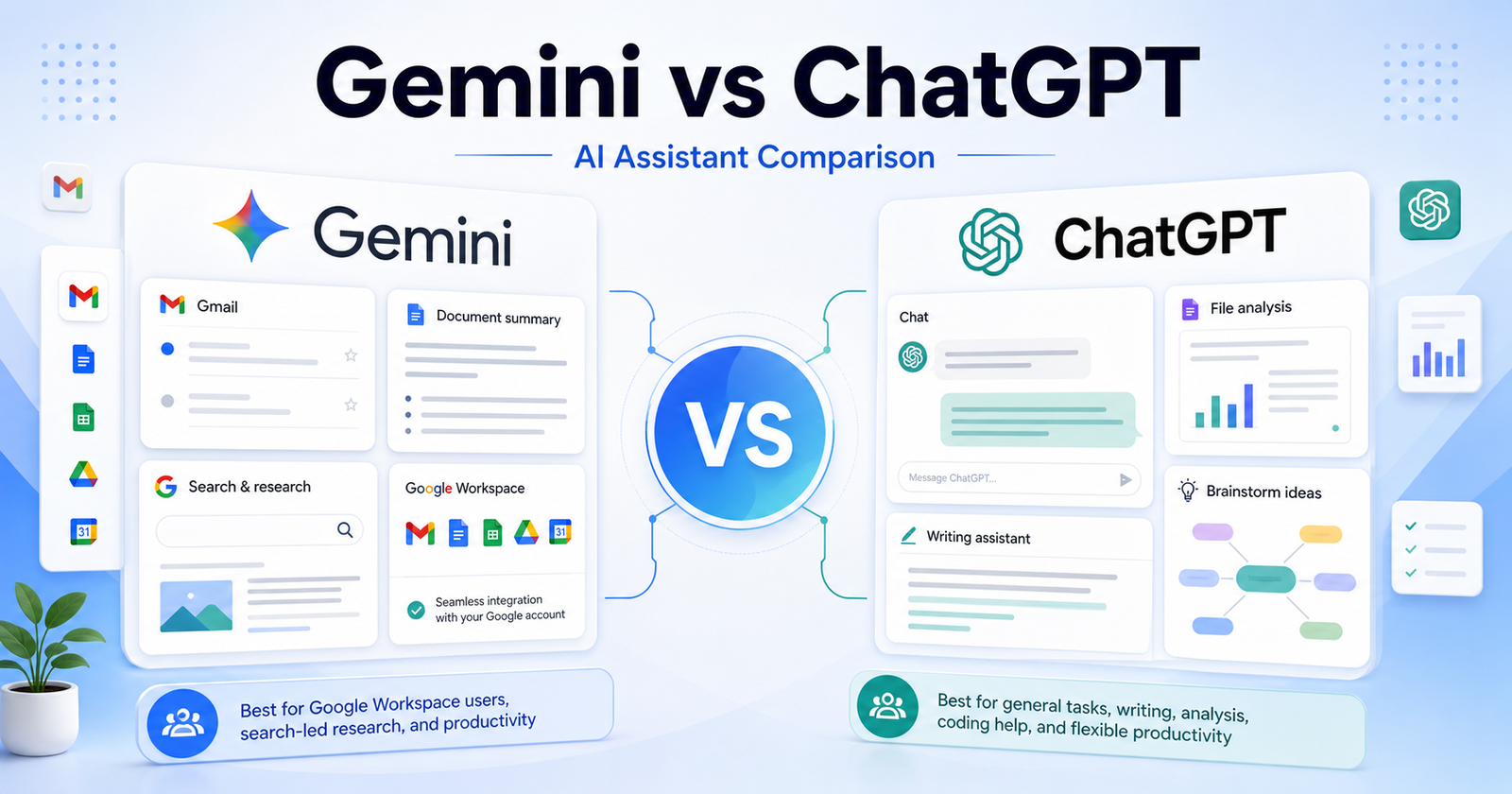
    Gemini vs ChatGPT: Which AI Assistant Is Better for Everyday Work? is a practical comparison for people choosing an AI tool for everyday productivity, research, writing, planning, and work inside Google or OpenAI ecosystems. The short version is simple: Choose ChatGPT if you want the broadest general assistant workflow. Choose Gemini if your work is strongly connected to Google apps and Google search-style research.

    This article uses verified official product and pricing pages as the safest source of truth. You can review Gemini official website and ChatGPT official website. Pricing changes often, so check Gemini pricing page and ChatGPT pricing page before buying.

    Quick Verdict

    Choose ChatGPT if you want the broadest general assistant workflow. Choose Gemini if your work is strongly connected to Google apps and Google search-style research.

    Do not choose only by the biggest feature list. Choose by the work you repeat every week, the amount of cleanup each output needs, and whether the tool fits your existing workflow.

    Gemini vs ChatGPT: Quick Comparison

    Comparison Point Gemini ChatGPT
    Main purpose Gemini is best suited for google workspace users, search-led research, email and document workflows, and people who prefer google account integration. ChatGPT is best suited for writers, marketers, students, analysts, creators, and teams that want a flexible assistant for writing, coding help, analysis, brainstorming, and file-based work.
    Best audience Google Workspace users, search-led research, email and document workflows, and people who prefer Google account integration. writers, marketers, students, analysts, creators, and teams that want a flexible assistant for writing, coding help, analysis, brainstorming, and file-based work.
    Core workflow Start inside Gemini and shape the output around its native workflow. Use ChatGPT where its assistant, search, design, coding, or automation flow already fits your work.
    Ease of use Strong when the user understands the intended workflow and keeps the first task focused. Strong when the user has a clear task and knows how to review AI output.
    Control Good for its primary workflow, but advanced control depends on the product category. Good for users who want more flexibility or a broader assistant/workspace model.
    Team fit Useful when the team shares a clear use case and review process. Useful when team members already work in the connected ecosystem.
    Research fit Better when its source or workspace model matches the job. Better when the user needs wider exploration or repeated follow-up questions.
    Content creation Can help produce drafts or structured outputs when prompts are specific. Can help create, revise, analyze, or automate content depending on the workflow.
    Learning curve Lower for users who match the primary use case. Lower for users already familiar with the broader platform or ecosystem.
    Main limitation Not always the best choice outside its strongest workflow. May require more setup, review, or prompt discipline for complex work.
    Best decision rule Choose Gemini when its workflow removes the biggest bottleneck. Choose ChatGPT when its strengths match the job you repeat most often.

    What Is Gemini?

    Gemini official website is one side of this comparison because it gives users a focused way to handle everyday productivity, research, writing, planning, and work inside Google or OpenAI ecosystems. It is strongest when the user has a clear task, understands the expected output, and reviews the result before using it in business-critical work.

    The practical advantage of Gemini is not that it can do everything. The advantage is workflow fit. If your day-to-day work looks like google workspace users, search-led research, email and document workflows, and people who prefer google account integration., Gemini deserves a serious test.

    What Is ChatGPT?

    ChatGPT official website is the other side of this comparison because it approaches the same buying decision from a different workflow. It is strongest when users need writers, marketers, students, analysts, creators, and teams that want a flexible assistant for writing, coding help, analysis, brainstorming, and file-based work.

    The best way to evaluate ChatGPT is to use the same task you would give to Gemini. Compare the usable output, not just the first impression. A strong AI tool should reduce the work needed after generation.

    Feature And Workflow Comparison

    Output Quality

    Both tools can produce useful output, but quality depends on the task and the review process. Gemini is a better fit when the task sits inside its main workflow. ChatGPT is a better fit when you need the type of control, ecosystem, or assistant behavior it provides.

    Speed

    Speed matters only when the result is usable. If one tool creates a first draft faster but requires more cleanup, it may not actually save time. Test both tools with one realistic project and measure the time from prompt to publishable, shareable, or deployable output.

    Control

    Control is where many buyers make the wrong decision. Some users need a simple guided workflow. Others need deeper editing, collaboration, technical control, or source review. Choose the tool that gives you enough control without making the workflow feel heavy.

    Collaboration

    For teams, the best tool is the one people will actually use consistently. Check whether your team can review outputs, share work, manage access, and keep the final result aligned with brand, quality, or technical standards.

    Best Use Cases For Gemini

    • Google Workspace users, search-led research, email and document workflows, and people who prefer Google account integration.
    • Users who want the tool’s default workflow instead of a heavily customized setup.
    • Teams that can define a clear prompt, review output, and repeat the process.
    • Buyers who want a focused product rather than a broad collection of unrelated features.
    • People who value a faster first draft when the final output still gets human review.

    Best Use Cases For ChatGPT

    • writers, marketers, students, analysts, creators, and teams that want a flexible assistant for writing, coding help, analysis, brainstorming, and file-based work.
    • Users who want a workflow that connects better with their existing tools.
    • Teams that need repeated output, structured review, and predictable handoff.
    • Buyers who care about flexibility and control after the first AI response.
    • People willing to compare plan limits, output quality, and cleanup time carefully.

    Pros And Cons

    Gemini Pros

    • Strong fit for google workspace users, search-led research, email and document workflows, and people who prefer google account integration.
    • Useful when the task is clear and repeatable.
    • Easier to evaluate with a small real-world project.
    • Can reduce setup time when its workflow matches the job.
    • Good candidate for teams that want a focused use case.

    Gemini Cons

    • May not be the best choice outside its core workflow.
    • Output still needs human review.
    • Pricing and limits should be checked before buying.
    • Some teams may need more control than the default workflow provides.

    ChatGPT Pros

    • Strong fit for writers, marketers, students, analysts, creators, and teams that want a flexible assistant for writing, coding help, analysis, brainstorming, and file-based work.
    • Useful when users need its specific ecosystem or workflow.
    • Can be a better long-term fit for repeated work.
    • Gives buyers a different way to solve the same core problem.
    • Worth testing when the first tool feels too narrow.

    ChatGPT Cons

    • May require more setup or learning for some users.
    • Output quality depends heavily on prompts and review.
    • Pricing, limits, and team features should be checked carefully.
    • It may be more tool than casual users need.

    Which One Should You Choose?

    Choose Gemini if your work mainly involves google workspace users, search-led research, email and document workflows, and people who prefer google account integration. Choose ChatGPT if your work mainly involves writers, marketers, students, analysts, creators, and teams that want a flexible assistant for writing, coding help, analysis, brainstorming, and file-based work.

    If you are unsure, use the same project brief in both tools. Compare quality, speed, cleanup time, export or handoff options, and current official pricing. The best AI tool is the one that gives you reliable output with the least repeated friction.

    For a second opinion on assistant choices, read our Claude vs ChatGPT comparison guide; for research-first work, the NotebookLM vs Perplexity comparison comparison is more targeted.

    Final Verdict

    Choose ChatGPT if you want the broadest general assistant workflow. Choose Gemini if your work is strongly connected to Google apps and Google search-style research. Both tools can be useful, but they are not interchangeable. The safer decision is to start with the tool that matches your weekly workflow, then upgrade only when the output quality and time savings are clear.

    FAQs

    Is Gemini better than ChatGPT?

    Gemini is better when your work matches its strongest use case: google workspace users, search-led research, email and document workflows, and people who prefer google account integration. ChatGPT is better when your work matches its strongest use case: writers, marketers, students, analysts, creators, and teams that want a flexible assistant for writing, coding help, analysis, brainstorming, and file-based work.

    Is ChatGPT better than Gemini?

    ChatGPT can be better if you need its workflow more often. The right choice depends on the type of work you repeat, the review process on your team, and how much control you need after the first AI-generated result.

    Which tool is easier for beginners?

    Gemini may feel easier for users who fit its default workflow. ChatGPT may feel easier for users already familiar with its ecosystem. Beginners should test the same small task in both tools before paying.

    Which tool is better for teams?

    Teams should choose the platform that fits their shared workflow, admin needs, review habits, and budget. A tool that works for one solo user may not be the best team system.

    Can I use both tools together?

    Yes. Many teams use more than one AI tool when each tool solves a different part of the workflow. The risk is paying for overlapping subscriptions without enough usage.

    Do these tools have free plans?

    Free access and trial details can change. Check the official pricing pages before making a buying decision.

    Which tool has better AI output?

    Output quality depends on the task, prompt clarity, source material, model access, and the human review process. Run one realistic project in both tools and compare cleanup time.

    Which tool is better for business use?

    For business use, compare security requirements, team controls, data handling, export options, support, and predictable pricing. Do not judge only by demo quality.

    Should I choose based on price?

    Price matters, but workflow fit matters more. The cheaper tool can become expensive if every output needs heavy cleanup or if your team does not actually use it.

    What is the fastest way to choose?

    Prepare one realistic task, run it through both tools, compare the result, check the official pricing pages, and choose the one that saves more usable time.
  • Gamma vs Canva AI: Which AI Presentation Tool Should You Choose?

    Gamma vs Canva AI: Which AI Presentation Tool Should You Choose?

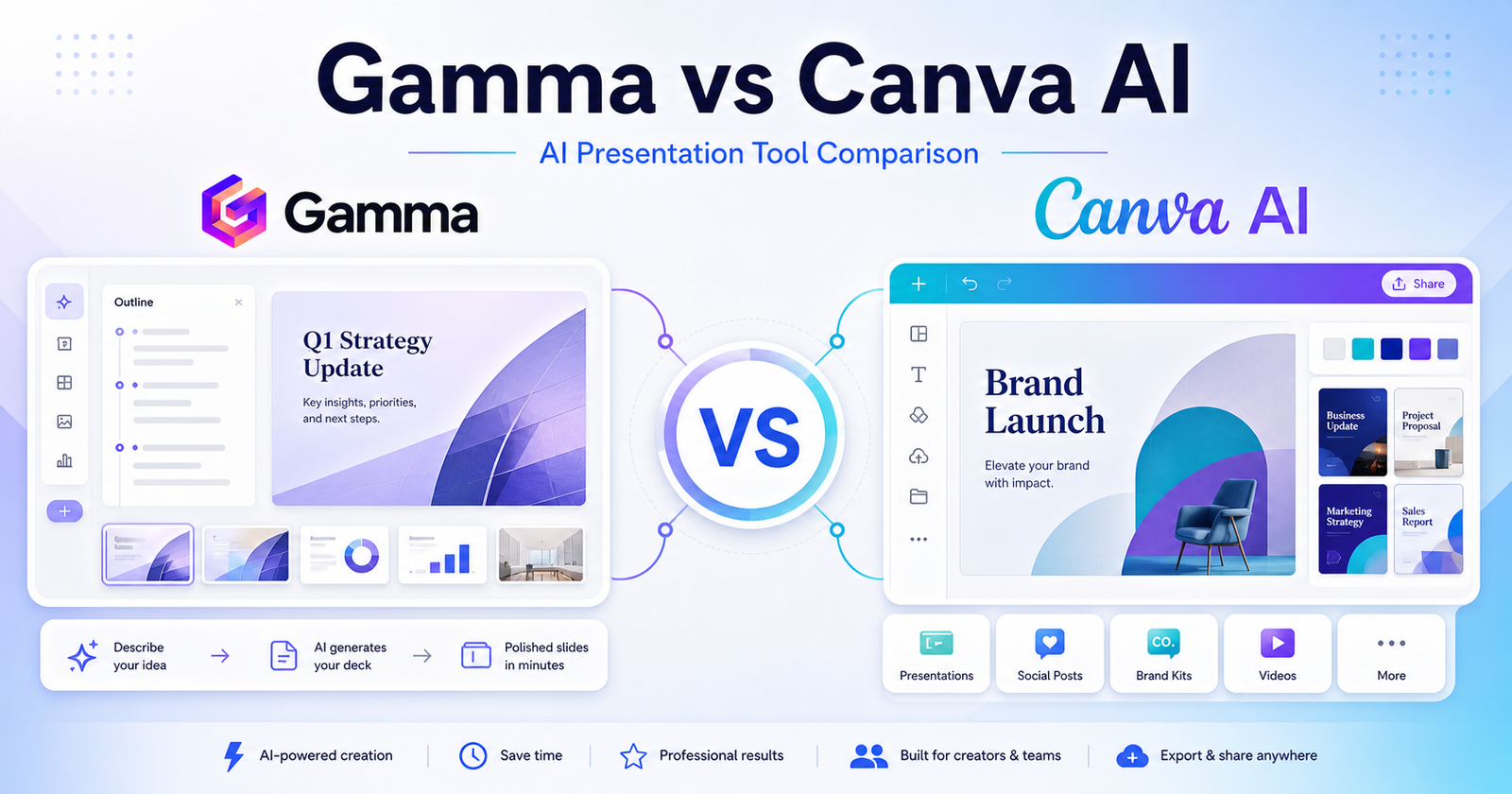
    Gamma vs Canva AI: Which AI Presentation Tool Should You Choose? is a practical comparison for people choosing an AI tool for AI-assisted slide decks, visual documents, social assets, brand design, and presentation export workflows. The short version is simple: Choose Gamma if your main job is turning ideas into polished decks and visual documents quickly. Choose Canva AI if you need presentations plus a broader design workspace for social, brand, video, and marketing assets.

    This article uses verified official product and pricing pages as the safest source of truth. You can review Gamma official website and Canva AI official website. Pricing changes often, so check Gamma pricing page and Canva AI pricing page before buying.

    Quick Verdict

    Choose Gamma if your main job is turning ideas into polished decks and visual documents quickly. Choose Canva AI if you need presentations plus a broader design workspace for social, brand, video, and marketing assets.

    Do not choose only by the biggest feature list. Choose by the work you repeat every week, the amount of cleanup each output needs, and whether the tool fits your existing workflow.

    Gamma vs Canva AI: Quick Comparison

    Comparison Point Gamma Canva AI
    Main purpose Gamma is best suited for founders, consultants, educators, and teams that create decks, documents, and shareable visual narratives. Canva AI is best suited for marketers, creators, small businesses, and teams that need ai design tools across many content formats.
    Best audience founders, consultants, educators, and teams that create decks, documents, and shareable visual narratives. marketers, creators, small businesses, and teams that need AI design tools across many content formats.
    Core workflow Start inside Gamma and shape the output around its native workflow. Use Canva AI where its assistant, search, design, coding, or automation flow already fits your work.
    Ease of use Strong when the user understands the intended workflow and keeps the first task focused. Strong when the user has a clear task and knows how to review AI output.
    Control Good for its primary workflow, but advanced control depends on the product category. Good for users who want more flexibility or a broader assistant/workspace model.
    Team fit Useful when the team shares a clear use case and review process. Useful when team members already work in the connected ecosystem.
    Research fit Better when its source or workspace model matches the job. Better when the user needs wider exploration or repeated follow-up questions.
    Content creation Can help produce drafts or structured outputs when prompts are specific. Can help create, revise, analyze, or automate content depending on the workflow.
    Learning curve Lower for users who match the primary use case. Lower for users already familiar with the broader platform or ecosystem.
    Main limitation Not always the best choice outside its strongest workflow. May require more setup, review, or prompt discipline for complex work.
    Best decision rule Choose Gamma when its workflow removes the biggest bottleneck. Choose Canva AI when its strengths match the job you repeat most often.

    What Is Gamma?

    Gamma official website is one side of this comparison because it gives users a focused way to handle AI-assisted slide decks, visual documents, social assets, brand design, and presentation export workflows. It is strongest when the user has a clear task, understands the expected output, and reviews the result before using it in business-critical work.

    The practical advantage of Gamma is not that it can do everything. The advantage is workflow fit. If your day-to-day work looks like founders, consultants, educators, and teams that create decks, documents, and shareable visual narratives., Gamma deserves a serious test.

    What Is Canva AI?

    Canva AI official website is the other side of this comparison because it approaches the same buying decision from a different workflow. It is strongest when users need marketers, creators, small businesses, and teams that need ai design tools across many content formats.

    The best way to evaluate Canva AI is to use the same task you would give to Gamma. Compare the usable output, not just the first impression. A strong AI tool should reduce the work needed after generation.

    Feature And Workflow Comparison

    Output Quality

    Both tools can produce useful output, but quality depends on the task and the review process. Gamma is a better fit when the task sits inside its main workflow. Canva AI is a better fit when you need the type of control, ecosystem, or assistant behavior it provides.

    Speed

    Speed matters only when the result is usable. If one tool creates a first draft faster but requires more cleanup, it may not actually save time. Test both tools with one realistic project and measure the time from prompt to publishable, shareable, or deployable output.

    Control

    Control is where many buyers make the wrong decision. Some users need a simple guided workflow. Others need deeper editing, collaboration, technical control, or source review. Choose the tool that gives you enough control without making the workflow feel heavy.

    Collaboration

    For teams, the best tool is the one people will actually use consistently. Check whether your team can review outputs, share work, manage access, and keep the final result aligned with brand, quality, or technical standards.

    Best Use Cases For Gamma

    • founders, consultants, educators, and teams that create decks, documents, and shareable visual narratives.
    • Users who want the tool’s default workflow instead of a heavily customized setup.
    • Teams that can define a clear prompt, review output, and repeat the process.
    • Buyers who want a focused product rather than a broad collection of unrelated features.
    • People who value a faster first draft when the final output still gets human review.

    Best Use Cases For Canva AI

    • marketers, creators, small businesses, and teams that need AI design tools across many content formats.
    • Users who want a workflow that connects better with their existing tools.
    • Teams that need repeated output, structured review, and predictable handoff.
    • Buyers who care about flexibility and control after the first AI response.
    • People willing to compare plan limits, output quality, and cleanup time carefully.

    Pros And Cons

    Gamma Pros

    • Strong fit for founders, consultants, educators, and teams that create decks, documents, and shareable visual narratives.
    • Useful when the task is clear and repeatable.
    • Easier to evaluate with a small real-world project.
    • Can reduce setup time when its workflow matches the job.
    • Good candidate for teams that want a focused use case.

    Gamma Cons

    • May not be the best choice outside its core workflow.
    • Output still needs human review.
    • Pricing and limits should be checked before buying.
    • Some teams may need more control than the default workflow provides.

    Canva AI Pros

    • Strong fit for marketers, creators, small businesses, and teams that need ai design tools across many content formats.
    • Useful when users need its specific ecosystem or workflow.
    • Can be a better long-term fit for repeated work.
    • Gives buyers a different way to solve the same core problem.
    • Worth testing when the first tool feels too narrow.

    Canva AI Cons

    • May require more setup or learning for some users.
    • Output quality depends heavily on prompts and review.
    • Pricing, limits, and team features should be checked carefully.
    • It may be more tool than casual users need.

    Which One Should You Choose?

    Choose Gamma if your work mainly involves founders, consultants, educators, and teams that create decks, documents, and shareable visual narratives. Choose Canva AI if your work mainly involves marketers, creators, small businesses, and teams that need ai design tools across many content formats.

    If you are unsure, use the same project brief in both tools. Compare quality, speed, cleanup time, export or handoff options, and current official pricing. The best AI tool is the one that gives you reliable output with the least repeated friction.

    If your presentation workflow leans more into visual design, compare this with our Canva AI vs Adobe Firefly comparison guide; research-led teams may also find NotebookLM vs Perplexity comparison helpful before creating slides.

    Final Verdict

    Choose Gamma if your main job is turning ideas into polished decks and visual documents quickly. Choose Canva AI if you need presentations plus a broader design workspace for social, brand, video, and marketing assets. Both tools can be useful, but they are not interchangeable. The safer decision is to start with the tool that matches your weekly workflow, then upgrade only when the output quality and time savings are clear.

    FAQs

    Is Gamma better than Canva AI?

    Gamma is better when your work matches its strongest use case: founders, consultants, educators, and teams that create decks, documents, and shareable visual narratives. Canva AI is better when your work matches its strongest use case: marketers, creators, small businesses, and teams that need ai design tools across many content formats.

    Is Canva AI better than Gamma?

    Canva AI can be better if you need its workflow more often. The right choice depends on the type of work you repeat, the review process on your team, and how much control you need after the first AI-generated result.

    Which tool is easier for beginners?

    Gamma may feel easier for users who fit its default workflow. Canva AI may feel easier for users already familiar with its ecosystem. Beginners should test the same small task in both tools before paying.

    Which tool is better for teams?

    Teams should choose the platform that fits their shared workflow, admin needs, review habits, and budget. A tool that works for one solo user may not be the best team system.

    Can I use both tools together?

    Yes. Many teams use more than one AI tool when each tool solves a different part of the workflow. The risk is paying for overlapping subscriptions without enough usage.

    Do these tools have free plans?

    Free access and trial details can change. Check the official pricing pages before making a buying decision.

    Which tool has better AI output?

    Output quality depends on the task, prompt clarity, source material, model access, and the human review process. Run one realistic project in both tools and compare cleanup time.

    Which tool is better for business use?

    For business use, compare security requirements, team controls, data handling, export options, support, and predictable pricing. Do not judge only by demo quality.

    Should I choose based on price?

    Price matters, but workflow fit matters more. The cheaper tool can become expensive if every output needs heavy cleanup or if your team does not actually use it.

    What is the fastest way to choose?

    Prepare one realistic task, run it through both tools, compare the result, check the official pricing pages, and choose the one that saves more usable time.
  • Claude vs ChatGPT: Which AI Assistant Should You Choose?

    Claude vs ChatGPT: Which AI Assistant Should You Choose?

    Claude Vs Chatgpt is a buyer-focused comparison for users choosing a daily AI assistant for writing, analysis, research, coding help, and business productivity. The right choice depends on the work you need to finish, the amount of control you want, the level of technical skill on your team, and how often you will rely on paid features.

    This comparison uses official product positioning and pricing pages as the safest source of truth. You can review Claude on its official website and check Claude plans on the official pricing page. You can also review ChatGPT on its official website and check ChatGPT plans from the official pricing page.

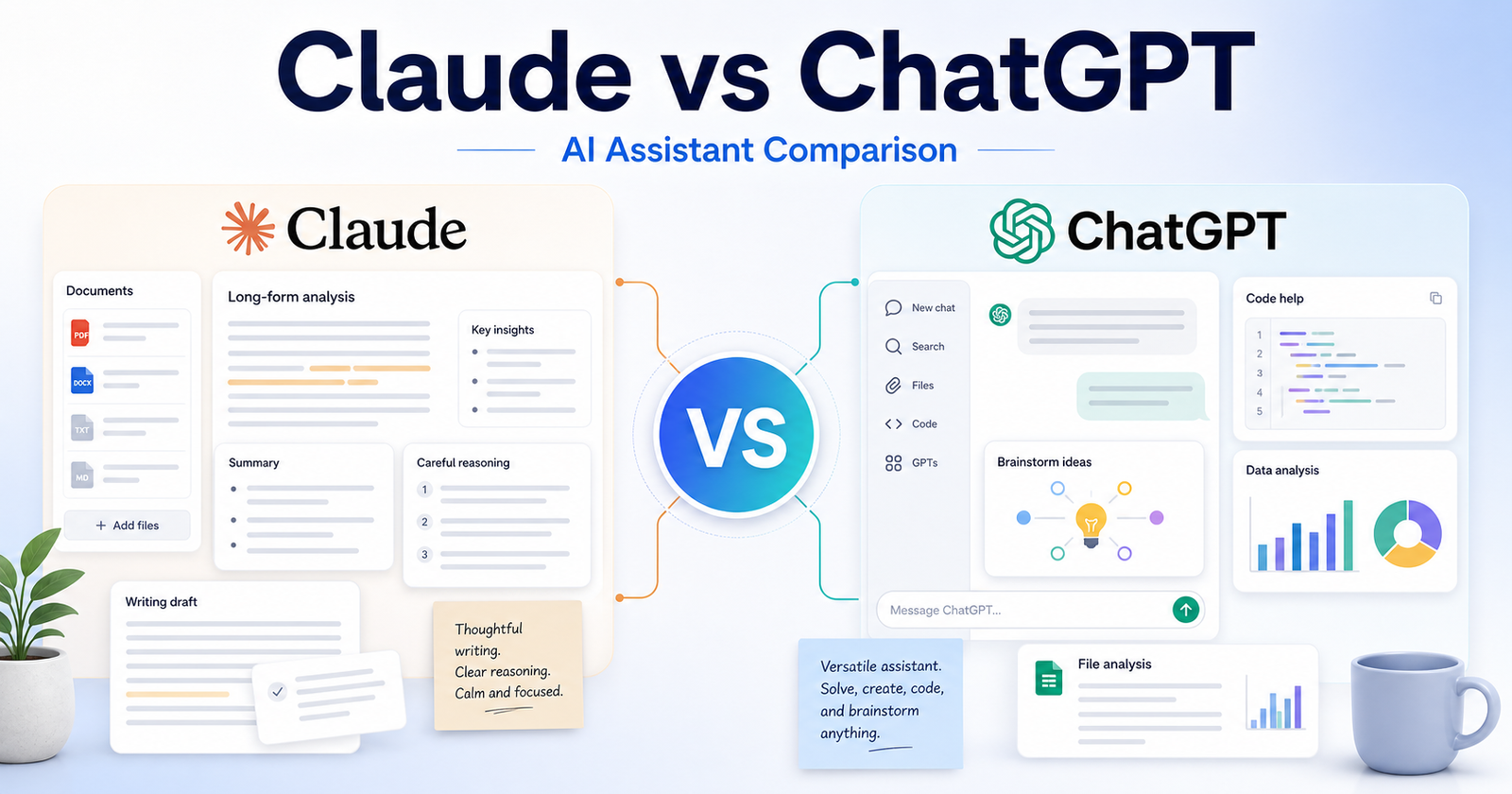
    The short version: ChatGPT is usually the better all-around choice if you want the widest assistant ecosystem and flexible everyday workflows. Claude is a strong choice if you value careful writing, long-form reasoning, document-heavy work, and a calmer drafting style. The better tool is not the one with the loudest feature list. It is the one that matches your daily workflow and reduces the amount of cleanup you need after the AI output.

    Quick Verdict

    Choose Claude if your work matches these needs: long-form writing and editing, document review and summarization, careful analysis of complex prompts. Choose ChatGPT if your work matches these needs: general everyday productivity, coding help and technical explanations, multimodal brainstorming and content planning. If your budget allows, compare both with the same small project before committing to a paid plan.

    For most buyers, the cleanest decision is to start with the tool that removes the biggest bottleneck. If your bottleneck is long-form writing and editing, Claude deserves the first look. If your bottleneck is general everyday productivity, ChatGPT deserves the first look.

    Claude vs ChatGPT: Quick Comparison

    Comparison Point Claude ChatGPT
    Main workflow Claude is strong for thoughtful drafting, analysis, and document-heavy work. ChatGPT is strong for broad assistant tasks across writing, research, coding, planning, and productivity.
    Best audience Writers, analysts, teams reviewing long documents, and users who prefer careful responses. General users, developers, marketers, students, creators, and teams that want one flexible assistant.
    Ease for beginners Simple chat experience with a restrained interface. Very familiar chat experience with wide public awareness.
    Creative control Good for shaping tone, structure, and long-form reasoning. Good for many formats, brainstorming modes, and iterative content creation.
    Writing support A major strength, especially for polished prose and careful editing. A major strength, especially when paired with outlines, rewrites, tables, and planning.
    Research support Useful for synthesis when you provide reliable material. Useful for brainstorming, explaining, structuring, and checking ideas with official sources.
    Coding or technical help Capable for explanation and code reasoning. Often preferred by users who want a broad coding and debugging assistant.
    Templates or starting points Best when the user supplies a detailed prompt or source document. Strong for many starting points, formats, and repeated workflows.
    Collaboration fit Works well for teams focused on writing, policy, documents, and analysis. Works well for teams that need a broad assistant across departments.
    Business use Good for careful internal drafts and document interpretation. Good for daily productivity, customer support drafts, content planning, and technical help.
    Learning curve Low, because the product feels focused. Low to medium, because there are more possible workflows to explore.
    Pricing risk Plan limits and model access can change, so confirm official pricing. Plan names, access, and limits can change, so confirm official pricing.
    Best free-plan use Trying the assistant for writing and reasoning tasks. Trying a general AI assistant for everyday tasks.
    Paid-plan value Best when long documents and careful analysis matter. Best when you use AI many times per day across different work types.
    Main limitation May feel less broad for users wanting the largest assistant ecosystem. May require more careful prompting and source verification for research-heavy work.

    What Is Claude?

    Anthropic positions Claude as an AI assistant that helps with writing, analysis, coding, learning, and workplace tasks. In this comparison, Claude matters because it gives users a particular way to move from an idea to useful output. That output might be a draft, design, app, research structure, or workflow depending on the tool category.

    The main advantage of Claude is fit. It is strongest when a user can describe the desired outcome clearly and when the product?s default workflow matches the user?s work style. A tool can be powerful and still be the wrong choice if every result needs heavy correction.

    Claude is best evaluated with a real task, not a vague demo prompt. A good test is to give it one project that resembles your everyday work, review how much manual cleanup remains, and then compare that effort against the subscription cost.

    What Is ChatGPT?

    OpenAI positions ChatGPT as a broad AI assistant for everyday tasks, work, creation, analysis, and paid team or business use. That positioning makes ChatGPT useful for a different type of buyer. Some users want the fastest possible first draft. Others want more control, broader features, or a workspace that connects with the tools they already use.

    The main advantage of ChatGPT is that it can be a stronger fit when the user?s workflow lines up with its product design. If a team already thinks in the same way the tool works, adoption becomes easier and the final output usually needs less explanation.

    Like Claude, ChatGPT should be tested with a realistic project. Avoid judging either tool only by social media clips, old screenshots, or one impressive demo. AI products move quickly, and plan limits can shift without old third-party posts being updated.

    Feature Comparison

    Output quality

    For output quality, Claude works best when the user wants long-form writing and editing and can guide the tool with specific instructions. ChatGPT works best when the user wants general everyday productivity and is comfortable shaping the result inside its workflow.

    The practical question is not whether Claude or ChatGPT can complete a task once. The practical question is which one gives repeatable results after five, ten, or twenty similar tasks. Repeatability matters more than novelty when a tool becomes part of daily work.

    Speed

    For speed, Claude works best when the user wants long-form writing and editing and can guide the tool with specific instructions. ChatGPT works best when the user wants general everyday productivity and is comfortable shaping the result inside its workflow.

    The practical question is not whether Claude or ChatGPT can complete a task once. The practical question is which one gives repeatable results after five, ten, or twenty similar tasks. Repeatability matters more than novelty when a tool becomes part of daily work.

    Control

    For control, Claude works best when the user wants long-form writing and editing and can guide the tool with specific instructions. ChatGPT works best when the user wants general everyday productivity and is comfortable shaping the result inside its workflow.

    The practical question is not whether Claude or ChatGPT can complete a task once. The practical question is which one gives repeatable results after five, ten, or twenty similar tasks. Repeatability matters more than novelty when a tool becomes part of daily work.

    Collaboration

    For collaboration, Claude works best when the user wants long-form writing and editing and can guide the tool with specific instructions. ChatGPT works best when the user wants general everyday productivity and is comfortable shaping the result inside its workflow.

    The practical question is not whether Claude or ChatGPT can complete a task once. The practical question is which one gives repeatable results after five, ten, or twenty similar tasks. Repeatability matters more than novelty when a tool becomes part of daily work.

    Learning curve

    For learning curve, Claude works best when the user wants long-form writing and editing and can guide the tool with specific instructions. ChatGPT works best when the user wants general everyday productivity and is comfortable shaping the result inside its workflow.

    The practical question is not whether Claude or ChatGPT can complete a task once. The practical question is which one gives repeatable results after five, ten, or twenty similar tasks. Repeatability matters more than novelty when a tool becomes part of daily work.

    Scalability

    For scalability, Claude works best when the user wants long-form writing and editing and can guide the tool with specific instructions. ChatGPT works best when the user wants general everyday productivity and is comfortable shaping the result inside its workflow.

    The practical question is not whether Claude or ChatGPT can complete a task once. The practical question is which one gives repeatable results after five, ten, or twenty similar tasks. Repeatability matters more than novelty when a tool becomes part of daily work.

    Export or handoff

    For export or handoff, Claude works best when the user wants long-form writing and editing and can guide the tool with specific instructions. ChatGPT works best when the user wants general everyday productivity and is comfortable shaping the result inside its workflow.

    The practical question is not whether Claude or ChatGPT can complete a task once. The practical question is which one gives repeatable results after five, ten, or twenty similar tasks. Repeatability matters more than novelty when a tool becomes part of daily work.

    Reliability

    For reliability, Claude works best when the user wants long-form writing and editing and can guide the tool with specific instructions. ChatGPT works best when the user wants general everyday productivity and is comfortable shaping the result inside its workflow.

    The practical question is not whether Claude or ChatGPT can complete a task once. The practical question is which one gives repeatable results after five, ten, or twenty similar tasks. Repeatability matters more than novelty when a tool becomes part of daily work.

    Best Use Cases for Claude

    Long-Form Writing And Editing

    Claude is a strong fit for long-form writing and editing because its workflow supports users who want to move quickly without rebuilding every step manually. This is especially useful when the task is repeated often and the user can provide clear instructions.

    A sensible way to test this use case is to prepare one realistic brief, run it through Claude, and measure the amount of editing, checking, or technical cleanup required before the result is ready to use.

    Document Review And Summarization

    Claude is a strong fit for document review and summarization because its workflow supports users who want to move quickly without rebuilding every step manually. This is especially useful when the task is repeated often and the user can provide clear instructions.

    A sensible way to test this use case is to prepare one realistic brief, run it through Claude, and measure the amount of editing, checking, or technical cleanup required before the result is ready to use.

    Careful Analysis Of Complex Prompts

    Claude is a strong fit for careful analysis of complex prompts because its workflow supports users who want to move quickly without rebuilding every step manually. This is especially useful when the task is repeated often and the user can provide clear instructions.

    A sensible way to test this use case is to prepare one realistic brief, run it through Claude, and measure the amount of editing, checking, or technical cleanup required before the result is ready to use.

    Teams That Want A Measured Writing Assistant

    Claude is a strong fit for teams that want a measured writing assistant because its workflow supports users who want to move quickly without rebuilding every step manually. This is especially useful when the task is repeated often and the user can provide clear instructions.

    A sensible way to test this use case is to prepare one realistic brief, run it through Claude, and measure the amount of editing, checking, or technical cleanup required before the result is ready to use.

    Users Who Prefer Direct, Less Busy Responses

    Claude is a strong fit for users who prefer direct, less busy responses because its workflow supports users who want to move quickly without rebuilding every step manually. This is especially useful when the task is repeated often and the user can provide clear instructions.

    A sensible way to test this use case is to prepare one realistic brief, run it through Claude, and measure the amount of editing, checking, or technical cleanup required before the result is ready to use.

    Best Use Cases for ChatGPT

    General Everyday Productivity

    ChatGPT is a strong fit for general everyday productivity because its workflow is better aligned with users who need that type of control or output. It may not be the simplest option for every buyer, but it can be the better option when the project demands its strengths.

    A useful test is to run the same project brief through ChatGPT, compare the result with Claude, and ask which output is closer to production-ready after a normal amount of review.

    Coding Help And Technical Explanations

    ChatGPT is a strong fit for coding help and technical explanations because its workflow is better aligned with users who need that type of control or output. It may not be the simplest option for every buyer, but it can be the better option when the project demands its strengths.

    A useful test is to run the same project brief through ChatGPT, compare the result with Claude, and ask which output is closer to production-ready after a normal amount of review.

    Multimodal Brainstorming And Content Planning

    ChatGPT is a strong fit for multimodal brainstorming and content planning because its workflow is better aligned with users who need that type of control or output. It may not be the simplest option for every buyer, but it can be the better option when the project demands its strengths.

    A useful test is to run the same project brief through ChatGPT, compare the result with Claude, and ask which output is closer to production-ready after a normal amount of review.

    Broad Third-Party Awareness

    ChatGPT is a strong fit for broad third-party awareness because its workflow is better aligned with users who need that type of control or output. It may not be the simplest option for every buyer, but it can be the better option when the project demands its strengths.

    A useful test is to run the same project brief through ChatGPT, compare the result with Claude, and ask which output is closer to production-ready after a normal amount of review.

    Teams That Want A Familiar Ai Assistant Workspace

    ChatGPT is a strong fit for teams that want a familiar AI assistant workspace because its workflow is better aligned with users who need that type of control or output. It may not be the simplest option for every buyer, but it can be the better option when the project demands its strengths.

    A useful test is to run the same project brief through ChatGPT, compare the result with Claude, and ask which output is closer to production-ready after a normal amount of review.

    Pros and Cons

    Claude Pros

    • Good fit for long-form writing and editing.
    • Approachable for users who match its core workflow.
    • Can reduce setup time when the brief is clear.
    • Useful for repeated work in its strongest category.

    Claude Cons

    • May still require review before business-critical use.
    • Paid value depends on real usage volume.
    • Not every impressive demo reflects everyday results.
    • Users should verify current pricing and terms.

    ChatGPT Pros

    • Good fit for general everyday productivity.
    • Useful when users want its specific workflow style.
    • Can be more suitable for teams already aligned with its ecosystem.
    • Worth testing for projects that need its strongest capabilities.

    ChatGPT Cons

    • May have a steeper learning curve for some users.
    • May be more than casual users need.
    • Plan limits should be checked before buying.
    • Outputs still need human review.

    Which One Should You Choose?

    Choose Claude if your work mainly involves long-form writing and editing, document review and summarization, careful analysis of complex prompts, teams that want a measured writing assistant. It will make more sense when you want the simplest path from a clear request to a useful result and when the tool?s defaults match your expectations.

    Choose ChatGPT if your work mainly involves general everyday productivity, coding help and technical explanations, multimodal brainstorming and content planning, broad third-party awareness. It will make more sense when you need the product?s specific workflow, stronger control in its category, or better alignment with your existing process.

    For teams, the decision should include more than features. Consider who will own the tool, who will review output, how often it will be used, whether results can be exported or handed off, and how much training is required before the team gets consistent value.

    If ChatGPT is still on your shortlist, our Gemini vs ChatGPT comparison comparison looks at Gemini as another everyday assistant, while ChatGPT vs Perplexity comparison focuses specifically on research use cases.

    Final Verdict

    ChatGPT is usually the better all-around choice if you want the widest assistant ecosystem and flexible everyday workflows. Claude is a strong choice if you value careful writing, long-form reasoning, document-heavy work, and a calmer drafting style. That does not make the other tool weak. It means the best choice depends on the job. AI tools are most valuable when they remove a specific bottleneck rather than adding another app to manage.

    If you are unsure, start with the free or lowest-risk option, run one real project in Claude, run the same project in ChatGPT, and compare the result by quality, time saved, cleanup required, and total cost. That practical test will tell you more than a feature checklist.

    FAQs

    Is Claude better than ChatGPT?

    Claude is better if your priority is long-form writing and editing. ChatGPT is better if your priority is general everyday productivity. The best choice depends on workflow fit, budget, and the type of output you need.

    Is ChatGPT better than Claude?

    ChatGPT can be better for users who need general everyday productivity or prefer its product workflow. Claude may still be better for users who want long-form writing and editing.

    Does Claude have a free plan?

    Check the official Claude pricing page because free access, included features, and usage limits can change. Do not rely on old screenshots or third-party pricing posts.

    Does ChatGPT have a free plan?

    Check the official ChatGPT pricing page because free access, included features, and usage limits can change. Plan details should be verified before subscribing.

    Which tool is better for beginners?

    Claude may be easier for beginners whose work matches long-form writing and editing. ChatGPT may be easier for beginners whose work matches general everyday productivity. The interface matters less than whether the workflow feels natural.

    Which tool is better for teams?

    Teams should choose the tool that matches their review process, collaboration needs, budget, and output standards. A team should test the same real project in both tools before rolling one out widely.

    Can I use both Claude and ChatGPT?

    Yes. Many users combine tools when each one handles a different part of the workflow. The risk is paying for overlapping subscriptions without using both enough to justify the cost.

    Which tool gives better output quality?

    Output quality depends on the task, prompt quality, plan limits, source material, and how carefully a human reviews the result. Run a realistic task in both tools before deciding.

    Are Claude and ChatGPT safe for business work?

    Business users should review official privacy, security, and data-use terms before adding confidential material. This article does not replace a legal, security, or procurement review.

    What is the fastest way to choose between Claude and ChatGPT?

    Pick one real project, run it in both tools, compare cleanup time and final quality, then check current official pricing. The winner is the tool that gives the best useful output for the lowest ongoing friction.

  • ChatGPT vs Perplexity: Which AI Tool Is Better for Research?

    ChatGPT vs Perplexity: Which AI Tool Is Better for Research?

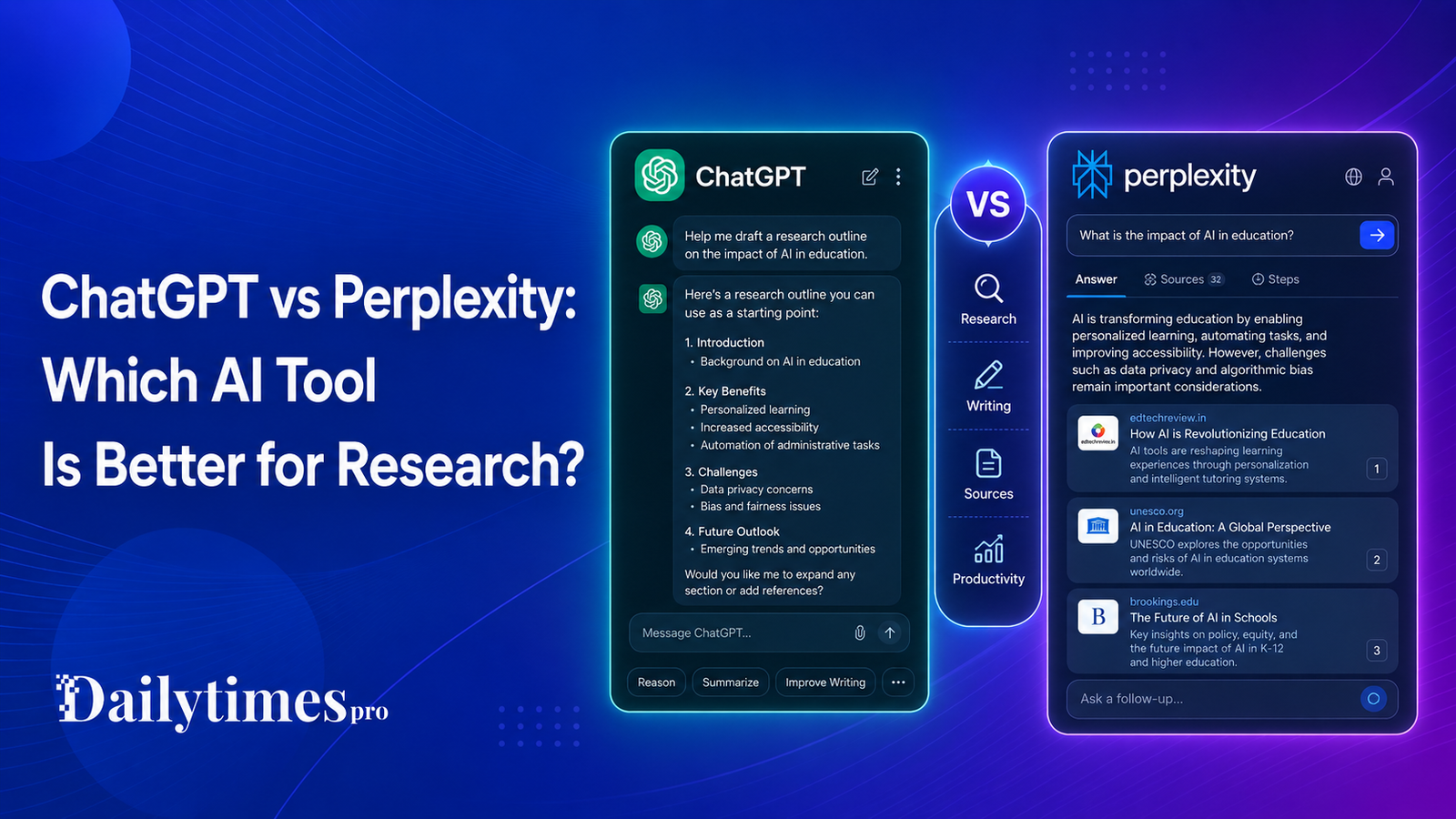
    ChatGPT vs Perplexity is a practical comparison for people who use AI to answer questions, research topics, compare tools, summarize information, and make decisions. Both products can help with research, but they are designed with different strengths.

    ChatGPT is a general AI assistant with free and paid plans for everyday tasks, writing, analysis, coding, file work, and broader productivity. Perplexity describes itself as an AI-powered answer engine that provides accurate, trusted, real-time answers to questions.

    The better choice depends on what you need. If you want a flexible assistant for writing, brainstorming, analysis, and many types of work, ChatGPT is usually the broader tool. If you want answer-focused research with source-oriented responses, Perplexity may feel more direct.

    Quick Verdict

    Choose ChatGPT if you want a general-purpose AI assistant for writing, planning, analysis, coding, and everyday productivity. Choose Perplexity if your main need is AI search and answer-focused research with real-time information. Many users may benefit from using both: ChatGPT for thinking and drafting, Perplexity for source-backed discovery and quick research checks.

    ChatGPT vs Perplexity: Quick Comparison

    Comparison Point ChatGPT Perplexity
    Main use General AI assistant AI-powered answer engine
    Best for Writing, analysis, coding, brainstorming, productivity Research, quick answers, source-led discovery
    Free plan Official pricing page lists a Free plan Perplexity website describes the product as free to use
    Paid plans OpenAI lists Free, Go, Plus, Pro, Business, and Enterprise options Perplexity pricing pages list personal and enterprise options
    Research style Conversational and flexible Search and answer oriented

    What Is ChatGPT?

    ChatGPT is OpenAI’s AI assistant for everyday tasks and professional work. Its official pricing page lists a Free plan and paid plans such as Go, Plus, Pro, Business, and Enterprise. OpenAI describes the free version as available for everyday tasks, while paid plans provide a more powerful experience with additional capabilities and access.

    ChatGPT is useful because it is not limited to one narrow workflow. People use it for drafting, summarizing, coding help, planning, analyzing documents, explaining technical ideas, and creating structured content.

    For research, ChatGPT is strongest when you need to think through a topic, compare options, turn notes into a draft, generate questions, or organize information into a useful structure.

    What Is Perplexity?

    Perplexity describes itself as a free AI-powered answer engine that provides accurate, trusted, and real-time answers to questions. That positioning is important. Perplexity is not only a chatbot. It is built around search-style answers and research discovery.

    Perplexity also has product and enterprise pricing pages. Its enterprise pricing page lists personal and team-oriented pricing options, including a personal Pro option and business-focused plans. As with any AI subscription, users should check the official pricing page before buying because plan details and limits can change.

    For research, Perplexity is strongest when you want fast answers, web-connected discovery, source-oriented exploration, and a search-like experience.

    Research Workflow Comparison

    ChatGPT and Perplexity can both support research, but they feel different in practice.

    ChatGPT is better when the research task requires reasoning, planning, rewriting, or synthesis. For example, if you want to turn scattered notes into an outline, compare pros and cons, draft a buyer guide, or explain a technical topic in simple language, ChatGPT is often the better workspace.

    Perplexity is better when the research task starts with finding information. If you want quick answers, source discovery, recent context, or a fast overview of a topic, Perplexity is often more direct.

    A useful workflow is to use Perplexity to discover sources and initial facts, then use ChatGPT to organize, analyze, and draft the final content.

    Pricing Comparison

    Pricing should always be checked from official pages before buying.

    OpenAI’s ChatGPT pricing page lists multiple plan types, including Free, Go, Plus, Pro, Business, and Enterprise. OpenAI also states that the free version is available to everyone and that paid plans provide a more powerful experience through additional features and access.

    Perplexity’s public pages describe the product as free to use, while its pricing pages list paid personal and enterprise options. The Perplexity enterprise pricing page shows personal and business pricing tiers, but users should confirm the current details on the official pricing page because AI product pricing changes often.

    Do not choose either product based only on old screenshots, Reddit comments, or third-party pricing posts. Check the official pricing page before subscribing.

    Best Use Cases for ChatGPT

    ChatGPT is a strong fit for users who need more than short answers.

    It works well for:

    • writing drafts and outlines
    • summarizing long notes
    • brainstorming ideas
    • coding help
    • explaining complex topics
    • planning content
    • creating tables, checklists, and workflows
    • analyzing documents or user-provided information

    For Dailytimespro-style work, ChatGPT is especially useful when turning verified research into structured article sections, FAQs, summaries, and comparison logic.

    Best Use Cases for Perplexity

    Perplexity is a strong fit for search-style research.

    It works well for:

    • quick factual discovery
    • source-led topic exploration
    • recent information checks
    • comparing public information across sources
    • finding official pages
    • understanding what people are asking about a topic
    • checking whether a tool or product has current web presence

    For AI tools research, Perplexity can be useful at the discovery stage, but important facts such as pricing, features, integrations, and launch claims should still be verified from official sources.

    Pros and Cons

    ChatGPT Pros

    • Flexible general-purpose AI assistant.
    • Useful for writing, coding, planning, analysis, and productivity.
    • Official pricing page clearly lists multiple plan types.
    • Strong for turning research into structured content.

    ChatGPT Cons

    • Users still need to verify current facts from official sources.
    • Research workflows may require source checking depending on the task.
    • Paid plan value depends on how often you use the product.

    Perplexity Pros

    • Built around answer-focused research.
    • Useful for quick discovery and real-time information checks.
    • Official website positions it as an AI-powered answer engine.
    • Strong fit for users who want search-like AI research.

    Perplexity Cons

    • It may be less flexible than ChatGPT for long-form drafting and broader productivity workflows.
    • Pricing and usage limits should be checked carefully on official pages.
    • Important claims still need official verification before being used in published content.

    Which One Should You Choose?

    Choose ChatGPT if you want one flexible AI assistant for many types of work. It is better for drafting, editing, planning, coding help, and turning information into polished output.

    Choose Perplexity if your main goal is research discovery. It is better when you want source-oriented answers and a search-like AI experience.

    If you create content, run a business, or research AI tools often, the best setup may be both: Perplexity for discovery and ChatGPT for reasoning, planning, drafting, and editing.

    For research-heavy workflows, this pairs naturally with our NotebookLM vs Perplexity comparison guide; if you are choosing a general assistant, also compare Claude vs ChatGPT comparison.

    Final Verdict

    ChatGPT vs Perplexity is not a simple winner-takes-all comparison. ChatGPT is the broader AI assistant. Perplexity is the more research-focused answer engine.

    For most users, ChatGPT is the better everyday AI workspace. For users who care most about source-led research and fast web-connected answers, Perplexity deserves a close look. The best choice depends on your workflow, budget, and how much you rely on current information.

    FAQs

    Is ChatGPT better than Perplexity?

    ChatGPT is better for general productivity, writing, coding, planning, and analysis. Perplexity is better for search-style research and answer-focused discovery.

    Is Perplexity better for research?

    Perplexity may be better for quick source-led research because it is positioned as an AI-powered answer engine. Important facts should still be verified from official sources.

    Is ChatGPT free?

    OpenAI’s official pricing page lists a Free plan for ChatGPT. Paid plans provide additional capabilities and access, but users should check the official pricing page for current details.

    Is Perplexity free?

    Perplexity’s official website describes it as a free AI-powered answer engine. Paid plans are also available, so users should check official pricing before subscribing.

    Should content writers use ChatGPT or Perplexity?

    Content writers may benefit from both. Perplexity can help with source discovery, while ChatGPT can help organize verified research into outlines, drafts, FAQs, and summaries.